
Éric Zemmour
Vatnik Soup, Substack,
In today’s Vatnik Soup, we introduce Éric Zemmour, a French nationalist politician and founder of Reconquête. His campaigns centre on immigration, Islam and national decline. For years, he also held up war criminal Vladimir Putin as his model for France.
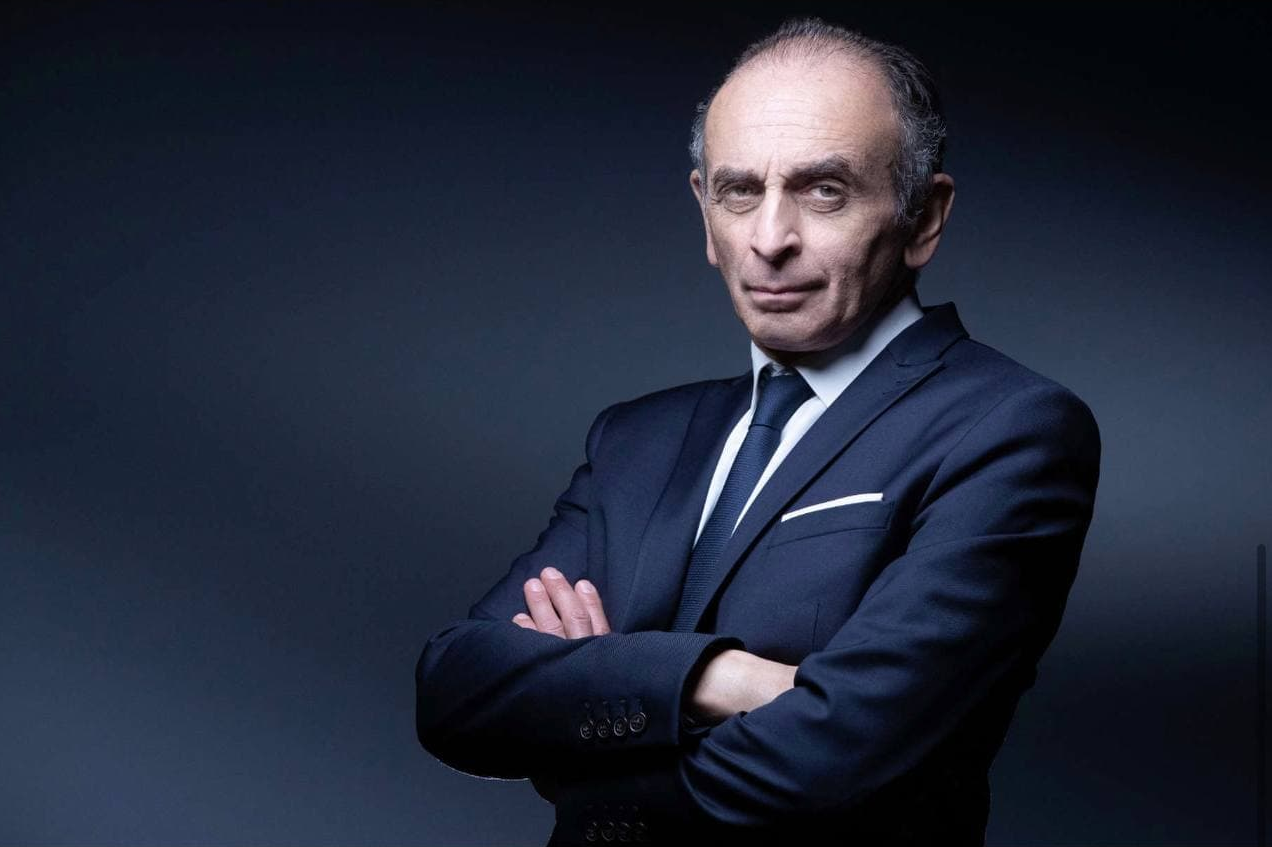
Born in Montreuil near Paris in 1958, Zemmour built a career as a journalist, author and television commentator. He joined Le Figaro’s political department in 1996, became known for confrontational television debates and founded the Reconquête party in December 2021.
Vincent Bolloré’s CNews gave him a daily platform in 2019. Zemmour then won 7.07% of votes cast in the first round of the 2022 presidential election, and his current campaign website just announced another run for 2027. Our Soup on Bolloré examines the media empire that helped him rise.
His domestic politics give the admiration for Putin its context. Zemmour promotes the “Great Replacement” conspiracy theory, claiming that immigration is replacing the French population. During the 2022 campaign, he refused to distinguish Islam from Islamism and proposed requiring parents to give their children French first names.
His current programme calls for stopping legal and illegal immigration and “remigrating” irregular migrants, foreign offenders and long-term unemployed foreigners. It would reserve non-contributory benefits, family allowances and social housing for French citizens.
His conception of power also targets checks on the majority. In 2021, he argued that judges should fall silent when the people speak, and called for taking power away from courts, media and minorities. A referendum would be his way around those constraints. Political scientist Gilles Ivaldi documented these positions in a December 2021 study of Zemmour’s politics.
The attraction to Putin was ideological. In 2013, Zemmour praised him for restoring the Russian state and defending national identity, the family and Orthodox religion. Russia offered a model of authority and national restoration (or an illusion thereof) that he wanted for France.
Ukraine’s independence received a very different treatment. In 2014, Zemmour declared that “Ukraine does not exist” and described it as a patchwork country. He compared Russia’s hold over Ukraine to France’s former African sphere: an exclusive preserve. He treated the country as part of a larger power’s domain.
Russian intermediaries took an interest in him. A Dossier Center investigation, conducted with the JDD (before the Collabolloré upheaval), traced a September 2015 meeting with Vladimir Yakunin, a former KGB officer, Putin associate and former head of Russian Railways. Correspondence published by the investigation welcomed Zemmour as an influential figure Russia needed, whose assessment of the era’s political conflicts was close to Yakunin’s own.
Note on the JDD. Its report was published on 5 March 2022, before the newspaper’s 2023 editorial upheaval. The appointment of Geoffroy Lejeune, a Zemmour supporter, provoked a newsroom strike. Vivendi’s takeover of Lagardère formally closed on 21 November 2023; RSF had already documented Bolloré’s influence before the deal was completed.
In January 2016, Zemmour travelled to Saint Petersburg and spoke at a conference linked to Yakunin. He also gave the state-controlled Rossiya 24 an interview, broadcast on 5 February. According to the JDD’s account, he presented the Ukraine crisis as a US creation designed to separate France and Germany from Russia. Asked about the contacts in 2022, Zemmour’s entourage told the newspaper that he did not know Yakunin’s name; Zemmour remembered a local political-science institution inviting him to discuss his book.
His public admiration continued. In L’Opinion on 18 September 2018, he praised Putin for trying to restore Russia’s greatness. Asked whether he dreamed of a French Putin, he agreed. This was four years after Russia’s illegal seizure of Crimea.
As Russian forces prepared for the full-scale invasion, Zemmour remained confident that there would be no war (a vatnik classic). On France 2 on 9 December 2021, he bet that Russia would not invade Ukraine. On 18 January 2022, he defended Putin’s demands and called for Ukraine to be kept outside NATO. The HuffPost compilation published on 24 February 2022 brings together his praise, justifications and failed prediction:
His written policy followed the same logic. On 14 February 2022, he proposed ending NATO enlargement and keeping Ukraine outside both blocs. After Putin recognised the separatist entities in Donbas, Zemmour condemned the violation of Ukrainian sovereignty on 21 February, but still opposed sanctions and repeated his proposed NATO settlement.
On 24 February 2022, he explicitly condemned Russia’s invasion as unjustifiable. He acknowledged that Russia had been neither attacked nor directly threatened by Ukraine, and called for an immediate ceasefire and French mediation.
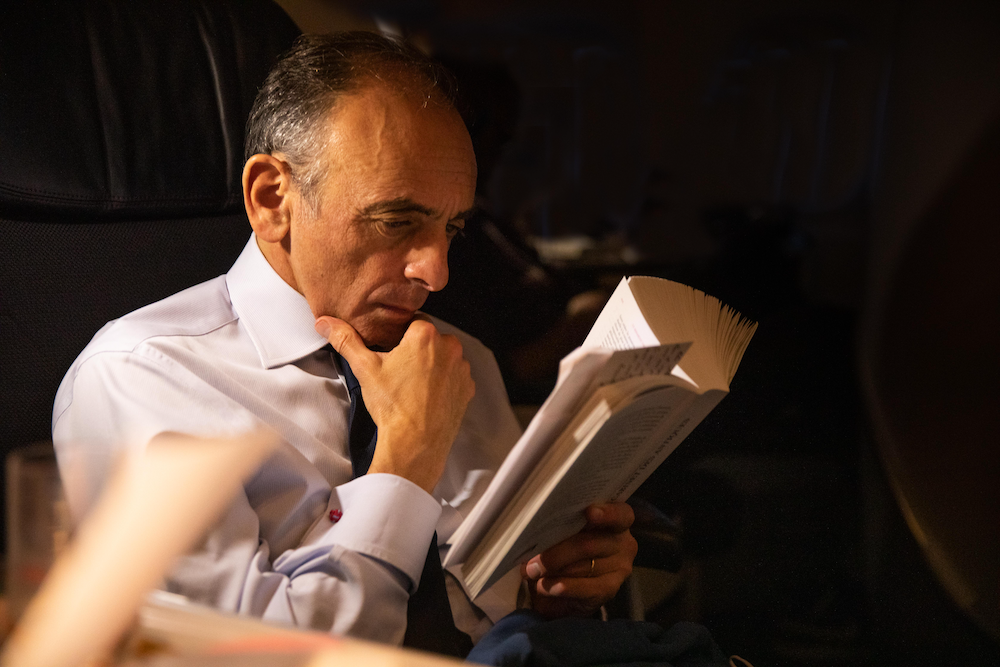
Photo: Anh De France / Wikimedia Commons, 22 December 2021, CC BY-SA 2.0.
But the indulgence survived. On RTL on 3 March 2024, he called Russia an “authoritarian democracy” and insisted that Putin enjoyed popular support. Responding to Emmanuel Macron’s discussion of Western troops in Ukraine, he argued for negotiations and compromise.
By 17 September 2026, on BFMTV, he was denying that he admired Putin. Confronted with his French-Putin dream, he first placed it fifteen years earlier, then counted 2018 as ten years ago. The interviewer corrected him: eight. Zemmour said that he admired the great dead, such as Napoleon, de Gaulle and Richelieu, rather than living people. He still defended his earlier praise by saying that Putin had restored Russia after the Yeltsin years.
That evening, he also criticised Putin for refusing peace and praised Ukrainians defending their independence. But aid to Ukraine was “not on [his] list now”. He warned that Ukraine’s growing defence industry could one day compete with France’s.
After years of treating Putin as a model for France, Zemmour recognised Ukrainians’ courage while leaving help for their country outside his immediate priorities.
Russian propaganda plays an essential role in enabling Putin’s wars. Our soups debunk it and document the vatniks who spread it. Fact-based research takes time and resources; please support our work: