
Soup 397, September 11, 2026
| Soup | 397 |
|---|---|
| Permalink | Permalink |
| Date | 2026-09-11 |
| Twitter/X | Read |
| Twitter/X Quotes | View |
| Twitter/X Latest Comments | View |
| Twitter/X Thread | Thread |
| Thread Reader App | Read |
| Thread Reader PDF | Read |
| Bluesky | Read |
| Bluesky Quotes | View |
| Read Bluesky Thread | Read |
| Bluesky Skyview | Read |
| Bluesky Skywriter | Read |
| Bluesky ThreadSky | Read |
| Posts | 20 |
| Soup type | Vatnik profile |
|---|---|
| Profession | Ballot initiative |
| Country of origin | Switzerland |
| Retweets | 412 |
| Likes | 1.4k |
| Views | 79.6k |
| Bookmarks | 102 |
| In other languages |
“Safeguard Swiss neutrality” ballot initiative
In today’s Vatnik Soup, we’ll introduce the “Safeguard Swiss neutrality” ballot initiative, which goes to a nationwide vote in Switzerland on 27 September. It’s best known for promising “no war” while actually encouraging wars by ending sanctions on belligerent states.

Switzerland is already neutral, and it is not about to be dragged into NATO: joining would already require a vote and a majority of both voters and cantons. Switzerland in fact receives enormous security benefits by being surrounded by NATO—but nobody is forcing it to join.


The real aim of the initiative is to restrict Switzerland’s ability to impose sanctions on belligerent states, such as Russia. After the full-scale invasion of Ukraine on 24 February 2022, Switzerland followed EU sanctions, and Christoph Blocher launched the initiative.

Blocher is one of the most influential figures in Swiss politics. The billionaire led the successful campaign against joining the European Economic Area in 1992 and played a key role in transforming the SVP (Swiss People’s Party, or maybe Swiss Vatnik Party?) from a small party to Switzerland’s largest.

Magdalena Martullo-Blocher, his daughter, is an SVP politician as well, a member of the initiative’s campaign committee, and the CEO and a major shareholder of EMS-Chemie, the company she took over from her father.


EMS-Chemie has operations in Russia and strong commercial interests in China. After Russia invaded Ukraine, she instructed employees to refer to the invasion as the “Ukraine conflict” rather than “war,” after Russia made it illegal to call its war a war.

The wider political-media environment is also telling. Roger Köppel, owner of Weltwoche and long-time Blocher ally, conducted friendly interviews with some of the Kremlin’s most infamous propagandists, including Vladimir Solovyov and RT editor-in-chief Margarita Simonyan.


In July, Köppel interviewed Simonyan for Weltwoche under the headline “Europeans, stop this war!” and gave her ample space to portray Europe as the aggressor and Russia as the poor little victim with no bad intentions towards Europeans whatsoever.
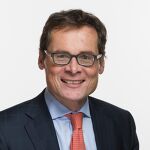 Roger Köppel
Somehow Ukrainians don’t count: the daily terror bombing of a sovereign European nation? The atrocities of Russian occupation? The kidnapping and russification of European children? Not even Russia’s war against the rest of Europe or Simonyan’s own belligerent statements?


Köppel did not ask. And it’s not just Swiss vatniks like him or Jacques Baud that support the initiative. Clare Daly is involved, and Jackson Hinkle, posting Russian state media footage, is already rejoicing about “the lifting of sanctions, including those against Russia.”


Swiss sanctions are far from symbolic: as a financial and trading centre, Switzerland punches far above its weight. Before 2022, 75% of Russian coal trading and 60% of Russian oil trading was handled through Switzerland, which also froze CHF 8.5 billion in Russian assets.

Swiss precision industry matters too. Russia’s arms industry depends heavily on advanced machine tools, spare parts and industrial equipment. Swiss-made machinery has even been found inside Russian weapons factories.
 Trotz Sanktionen: Schweizer Maschinen in Russlands Waffenfabriken
If the initiative were accepted, the only sanctions Switzerland could still impose directly on a belligerent state would be those approved by the UN Security Council… where Russia has a veto.

The logic of the initiative is strange: Russia is violating international law every day BUT would respect Swiss neutrality if Switzerland appeases it enough. Switzerland’s partners and potential allies, on the other hand, are expected not to notice.
 European nations snub Swiss-made weapons over Ukraine restrictions
Switzerland has in fact gone to great lengths to remain militarily neutral during Russia’s ongoing invasion of a peaceful nation, including blocking Germany, Denmark and Spain from transferring Swiss-origin weapons and ammunition they already possessed to Ukraine.

Sanctions are one of the main alternatives to military involvement: a way to raise the cost of aggression without sending a single Swiss soldier anywhere.
Swiss restrictions already go far beyond what international law requires of a neutral state.
Swiss restrictions already go far beyond what international law requires of a neutral state.

The initiative’s supporters campaign under the slogan “No war!”.
But war cannot simply be abolished by decree. Magdalena Martullo-Blocher could instruct her employees not to call Russia’s brutal war a war; Switzerland alone cannot force Russia to stop actually waging it.

But war cannot simply be abolished by decree. Magdalena Martullo-Blocher could instruct her employees not to call Russia’s brutal war a war; Switzerland alone cannot force Russia to stop actually waging it.
The “No war!” slogan is dishonest: the initiative does not prohibit Switzerland from sanctioning peaceful states, only belligerent ones. Absurdly, Switzerland could therefore impose sanctions on a state while it is at peace, yet would lift them if that state went to war.
It is difficult to imagine a more literal way of rewarding aggression: under a proposal advertised as “No war!”, becoming a belligerent state would actually protect an authoritarian state from Swiss sanctions. Refusing to impose costs on a state that starts a war of aggression — or worse, rewarding it — does not make war disappear; in fact, it can help that war continue and increase the risk of future wars too.
Even for Switzerland.
Even for Switzerland.
Russia spends $5 billion a year on propaganda narratives and information operations to manufacture support for its invasions through vatniks and useful idiots. Fact-based research to counter it takes time and effort — please support our work:
 Fight Disinformation With Us: Support our Work | Vatnik Soup
More soup?
Articles
- Vatnik Soup, “Switzerland’s “Neutrality” Vote Is Really About Sanctions”, X Articles, September 7, 2026 Switzerland’s Neutrality Initiative: Neutrality, Sovereignty and the September 2026 Vote
Links, documents, resources
From the horse’s mouth
- Jackson Hinkle — X post celebrating Swiss neutrality rally and lifting sanctions on Russia
- Neutrality Initiative — Main referendum committee (de)
- Neutrality Initiative — Committee members (de)
- Roger Köppel — “Blochers Weisheit” (de)
- Pro Schweiz — Founding of Pro Schweiz and merger of AUNS with two other EU-critical groups (de)
- Pro Schweiz — Blocher–Köppel neutrality campaign event (de)
- Weltwoche Daily — Neutrality campaign event with Christoph Blocher and Roger Köppel (de)
- Weltwoche Daily — Köppel–Solovyov interview (de)
- Weltwoche Daily — Köppel interview with Margarita Simonyan (de)
- Pro Schweiz — Support and presentation of the Neutrality Initiative, 15 October 2022 (de)
- Schweizerische Friedensbewegung — Schluss der Kriegslogik: pro-initiative rally with Clare Daly, 5 September 2026 (de)
- Bewegung für Neutralität (BENE) — Pro-initiative Bundesplatz rally, 29 August 2026 (de)
- Daniele Ganser — Telegram posts supporting the Neutrality Initiative (de)
- Daniele Ganser — Facebook post supporting the Neutrality Initiative (de)
- SVP — 2011 campaign against the initiative “For protection against gun violence” (de)
- SVP — 2013 delegates unanimously reject abolition of compulsory military service (de)
- SVP / Christoph Blocher — “Es geht um Krieg oder Frieden!” (de)
- PdA Bern — 5 September left-wing pro-initiative rally and exclusion of right-wing/nationalist slogans (de)
- Kommunistische Partei — Massimiliano Ay at the 29 August pro-initiative rally (de)
- SVP — “Die bewaffnete Neutralität ist ein Friedens-Instrument!” (de)
The September vote
What Switzerland is actually deciding
- Federal Popular Initiative “Safeguard Swiss neutrality (Neutrality Initiative)”
- Swiss government — Switzerland’s policy of neutrality
- About Switzerland — Political system
- Swiss Federal Council — Parties in the Federal Council since 1848
- Swiss Federal Council — History of the Federal Council
- About Switzerland — Direct democracy
- The Swiss Confederation — A Brief Guide 2026
- Swiss Parliament — Proposed counterproposal to the Neutrality Initiative
- UN Security Council — Article 41 measures and sanctions
- United Nations — Functions and powers of the General Assembly
- United Nations General Assembly — “Uniting for Peace” Resolution 377 (V)
- Federal Chancellery — Legislative drafting guidelines on linked referendum-dependent measures (de)
- Federal Department of Foreign Affairs — Neutrality Initiative: sanctions and anti-circumvention FAQ (de)
- SRF — First poll on the Neutrality Initiative (de)
- Swiss Parliament — Federal popular initiatives and counterproposals (de)
NATO and security cooperation
Membership, cooperation, public opinion and European security
- Finnish Foreign Ministry — Pekka Haavisto on Finland’s NATO option
- Yle — Finnish NATO support reaches 76%
- Yle — Finnish Parliament approves NATO application 188–8
- U.S. State Department — Forcible Soviet occupation of the Baltic states in 1940
- Estonian World — Johannes Kaiv’s 1949 letter welcoming NATO
- NATO — Hungary and NATO
- NATO — Relations with Switzerland
- NATO — Finland joins NATO
- NATO — Sweden joins NATO
- NATO — Relations with Finland
- Finnish government — Report on Finland’s accession to NATO
- Reuters — Yanukovych campaigns on staying out of NATO while keeping Ukraine in the European mainstream
- NATO — Relations with Ukraine: non-alignment from 2010 to 2014 and subsequent NATO course
- Razumkov Centre — Public support for Ukraine’s Euro-Atlantic course
- Yle — January 2022 Finnish NATO membership poll
- Yle — Finnish NATO support rises to 53%
- Swiss Security Policy Study Commission — Report 2024 (de)
- ETH Zürich / Military Academy — Sicherheit 2024 (de)
- ETH Zürich / Military Academy — Sicherheit 2025 (de)
- ETH Zürich / Military Academy — Sicherheit 2026 (de)
Neutrality in history
- Swiss government — History and principles of Swiss neutrality
- Martti Ahtisaari — Finland and the lessons of the Winter War
- Bergier Commission — Switzerland and gold transactions during World War II
- USHMM — Vél d’Hiv roundup
- Swiss government — 1993 neutrality report
- Swiss government — 2022 review of neutrality
- United Nations Geneva — The League at Work: Manchuria, Ethiopia and the collapse of collective security
- U.S. State Department — Ethiopia crisis, sanctions and the Suez Canal
- U.S. State Department — Treaty of Versailles military, naval and aerial restrictions on Germany
- HistoryNet / Mark Grimsley — What If Britain and France Had Not Appeased Hitler in 1938?
- U.S. Holocaust Memorial Museum — German Armed Forces High Command and the 1938 anti-Hitler coup plans
- U.S. Holocaust Memorial Museum — Czechoslovakia, Munich and the Sudetenland
- U.S. State Department — 1938 diplomatic reporting on Hitler’s Czechoslovakia gamble and “50 percent bluff”
- UN Human Rights Monitoring Mission in Ukraine — Russian discriminatory policies, imposed citizenship and conscription in occupied Ukraine
- OHCHR — Children’s rights in Ukraine: Russian curriculum, militarisation and conscription in occupied territory
- Finnish Foreign Ministry — Matti Vanhanen on Finnish neutrality
- USHMM — World War II in depth: invasions of Poland, Denmark, Norway and the neutral Low Countries
- Norwegian Armed Forces — Our history: neutrality no guarantee against occupation
- Swiss Federal Council — 1970 working group on alleged secret PLO agreement
- Portal Rheinische Geschichte — The remilitarisation of the Rhineland, 7 March 1936 (de)
- German Federal Archives — Lipetsk: the Reichswehr’s secret flying school and testing site in the Soviet Union (de)
Blocher, AUNS and the initiative
- SWI swissinfo — Russia sanctions at heart of Swiss neutrality vote
- Swiss Federal Council — Switzerland adopts EU sanctions against Russia
- Tages-Anzeiger — FDP says Neutrality Initiative is pro-Putin (de)
- SRF — Christoph Blocher and the Neutrality Initiative (de)
- SRF — Campaign financing for the September 2026 vote (de)
- Blick — Blocher und Co. stechen in den Kampf um die Neutralität (Joschka Schaffner, 4 August 2026) (de)
- Federal Chancellery / Fedlex — Neutrality Initiative qualifies with 129,806 valid signatures (de)
- Swiss Parliament — Proceedings and final decision on the Neutrality Initiative (de)
- Federal Council — Message on the Neutrality Initiative, including legal analysis, anti-circumvention exception, UN sanctions, chronology and procedural deadlines (de)
Blocher’s network and supporters
- KSE Institute Leave Russia — EMS-Chemie
- EMS-EFTEC — Russia locations
- China State Council — Taiwan Question and China’s Reunification in the New Era
- Forbes — Miriam Baumann-Blocher
- Forbes — Markus Blocher
- Forbes — Rahel Blocher
- Forbes — Magdalena Martullo-Blocher
- NewsVoice — Transcript of Köppel–Simonyan interview
- The Daily Beast — Solovyov on territorial “enlargement” toward Lake Como
- Euractiv — Yanukovych pledges to work for EU integration
- Council of Europe / PACE — Political crisis in Ukraine and the November 2013 EU Association Agreement reversal
- Reuters — Russian pressure and trade threats over Ukraine’s EU Association Agreement
- Verkhovna Rada — Roll-call vote removing Yanukovych and scheduling the 25 May 2014 election
- OSCE/ODIHR — Ukraine’s 25 May 2014 early presidential election
- OSCE/ODIHR — Ukraine 2014 early presidential election final report and results
- Reuters — Putin says Russia helped Yanukovych flee to Russia
- Razumkov Centre — Public opinion on the war, victory and security guarantees
- EUR-Lex — Jacques Baud listing under EU measures against Russian destabilising activities
- Vatnik Soup — Clare Daly
- Vatnik Soup — Mick Wallace
- EUR-Lex — Jacques Baud action challenging EU sanctions (Case T-169/26)
- Vatnik Soup — Vatnik Baseball Cards: search “Alfred de Zayas”
- Vatnik Soup — Daniele Ganser (English)
- Vatnik Soup — Roger Köppel (English)
- Vatnik Soup — Jackson Hinkle
- Vatnik Soup — French Guest Soups: search “Jacques Baud” (fr)
- SRF — Why EMS-Chemie remained in Russia (de)
- WOZ — EMS-Chemie employees told not to call invasion a “war” (de)
- SRF — Martullo-Blocher on doing business in controversial markets (de)
- EMS Group — Finance Report 2025 (de)
- Blick — Martullo-Blocher at Swiss-Chinese business round table (de)
- Blick — EMS dividends and personnel costs (de)
- Bilanz — Blocher family fortune (de)
- SRF — Roger Köppel takes control of Weltwoche (de)
- SRF — Köppel as Blocher’s “spiritual son” (de)
- Die Presse — Roger Köppel on Weltwoche’s 2003 SVP voting recommendation (de)
- Watson — Blocher on Köppel’s political role through Weltwoche (de)
- CH Media / Tagblatt — “Neutralitätsgipfel”: Blocher will Pro-Putin-Verdacht loswerden – aber Köppel hilft ihm nicht dabei (Francesco Benini, 5 September 2026) (de)
- NZZ — Jean-Pierre Gallati criticises the Neutrality Initiative as “neutralism” benefiting Russia (de)
- Blick — SVP critics of the Neutrality Initiative: Gallati, Spuhler, im Oberdorf and Schmid (1–2 September 2026) (de)
- SRF — Peter Spuhler criticises the Neutrality Initiative and its sanctions logic (28 March 2026) (de)
- Watson — Diese Linken unterstützen Blochers Neutralitätsinitiative (de)
- Vatnik Suppe — Daniele Ganser (de)
- Vatnik Suppe — Roger Köppel (de)
- GSoA — Nein zur bewaffneten Geldsack-Neutralität der SVP (de)
- Swissvotes — 1989 initiative for a Switzerland without an army (de)
- Federal Chancellery — 2011 initiative “For protection against gun violence” (de)
- Federal Chancellery — 2013 initiative to abolish compulsory military service (de)
- Republik — Die Geschäfte der Blochers in Russland (de)
Russia and Swiss neutrality
- WHO — More than 3,000 attacks on health care in Ukraine verified
- Swiss federal reporting — Russian intelligence activity in Switzerland in 2018
- SWI swissinfo — Russia lists Switzerland as an “unfriendly” country
- The Guardian — Russia seizes Audemars Piguet watches
- SWI swissinfo — Switzerland and Ukraine agree protecting-power mandate
- ICRC — History of the Red Cross emblem
- William R. Trotter — A Frozen Hell
- OHCHR — Human rights situation in Ukraine, December 2024–May 2025
- ICRC — ICRC office damaged by shelling in Ukraine
- ICRC — ICRC warehouse damaged in Mariupol
- Euromaidan Press / RSI — Swiss-owned Leopard 1 tanks stored in Italy after transfer to Ukraine was blocked
- Swiss government — War Materiel Act goes beyond the law of neutrality
- Ukrainska Pravda — Swiss Rapier systems and potential use against low-flying threats
- U.S. Congressional Research Service — International Neutrality Law and U.S. Military Assistance to Ukraine
- Swiss Federal Council — 2014 measures to prevent circumvention of international sanctions against Russia
- Swiss Federal Council — Neutrality practice during the Iraq conflict
- Oxford Handbook of International Law in Armed Conflict — The Law of Neutrality
- Le Matin — Swiss restrictions affecting demining equipment for Ukraine (fr)
- Le Temps — Moscow says Geneva is no longer neutral (fr)
- Le Temps — Switzerland declines to expel suspected Russian spy-diplomats (fr)
- Le Matin — Swiss embassy flag in Kyiv (fr)
- 20 Minuten — Speeding and parking complaints involving Russian diplomats (fr)
- Tages-Anzeiger — Why Switzerland removed its flag in Kyiv (de)
- Berner Zeitung — Complaints around the Russian embassy in Bern (de)
- Swiss Federal Department of Economic Affairs — German request to re-export 12,400 rounds of 35 mm Gepard ammunition (de)
- SRF — Swiss-origin Gepard ammunition, Piranha III vehicles and Spanish anti-aircraft guns blocked for Ukraine (de)
- Swiss Armed Forces — Decommissioning of the Rapier air-defence system (de)
- SRF — Die Russland-Affäre im Schweizer Geheimdienst (de)
Sanctions and deterrence
- NATO — Washington Summit Declaration
- Council of the EU — 21st package of sanctions against Russia
- SECO — Machine tools and sanctions guidance
- Swiss Federal Intelligence Service — Security Switzerland 2025
- Chatham House — Russia’s military-industry machine-tool vulnerability
- Rhodus Intelligence — How Does Russia Make Missiles?
- Kamil Galeev — Rhodus missile-industry supplier and chokepoint mapping
- Important Stories — Kamil Galeev on machine tools, software and sanctions
- European Commission — 16th sanctions package against Russia
- European Commission — 17th sanctions package against Russia
- Reuters — Kremlin says sanctions will never force Russia to change course
- Bank of Russia — Nabiullina on sanctions pressure, imports and payments
- Reuters — Bessent tells Russian finance minister no economic relief until war ends
- U.S. Department of Defense — 2025 China Military Power Report
- U.S. Department of State — Xinjiang detention estimates
- OHCHR — Assessment of human rights concerns in Xinjiang
- UK House of Commons Library — Uyghur Tribunal and genocide findings
- SRF — Swiss machine tools in Russian weapons factories (de)
- SRF — Conviction over Russia machine-tool exports (de)
- SRF — Neutrality Initiative explained (de)
Conclusion
- Federal Department of Foreign Affairs — Neutrality
- International Churchill Society — Churchill’s 20 January 1940 “crocodile” speech
- UN Commission of Inquiry — Deportation and forcible transfer of Ukrainian children
- OHCHR — Impact of Russia’s war on children in Ukraine
- OHCHR — Genocide Convention
- UN Commission of Inquiry — Russian drone attacks against civilians in Kherson
- UN Commission of Inquiry on Ukraine — Report on violations and genocide allegations