
Soup HM1, November 28, 2026
| Soup | HM1 |
|---|---|
| Permalink | Permalink |
| Date | 2026-11-28 |
| Twitter/X | Read |
| Twitter/X Quotes | View |
| Twitter/X Latest Comments | View |
| Twitter/X Thread | Thread |
| Thread Reader App | Read |
| Thread Reader PDF | Read |
| Bluesky | Read |
| Bluesky Quotes | View |
| Read Bluesky Thread | Read |
| Bluesky Skyview | Read |
| Bluesky Skywriter | Read |
| Bluesky ThreadSky | Read |
| Posts | 15 |
| Soup type | History |
|---|---|
| Retweets | 445 |
| Likes | 1.1k |
| Views | 16.9k |
| Bookmarks | 66 |
| In other languages | Holodomor (cs) |
The Holodomor Genocide
Today, on Holodomor Remembrance Day, we publish our first Historical Memory Dossier, dedicated to the millions of Ukrainians who died in 1932–33 and to those who survived to bear witness.
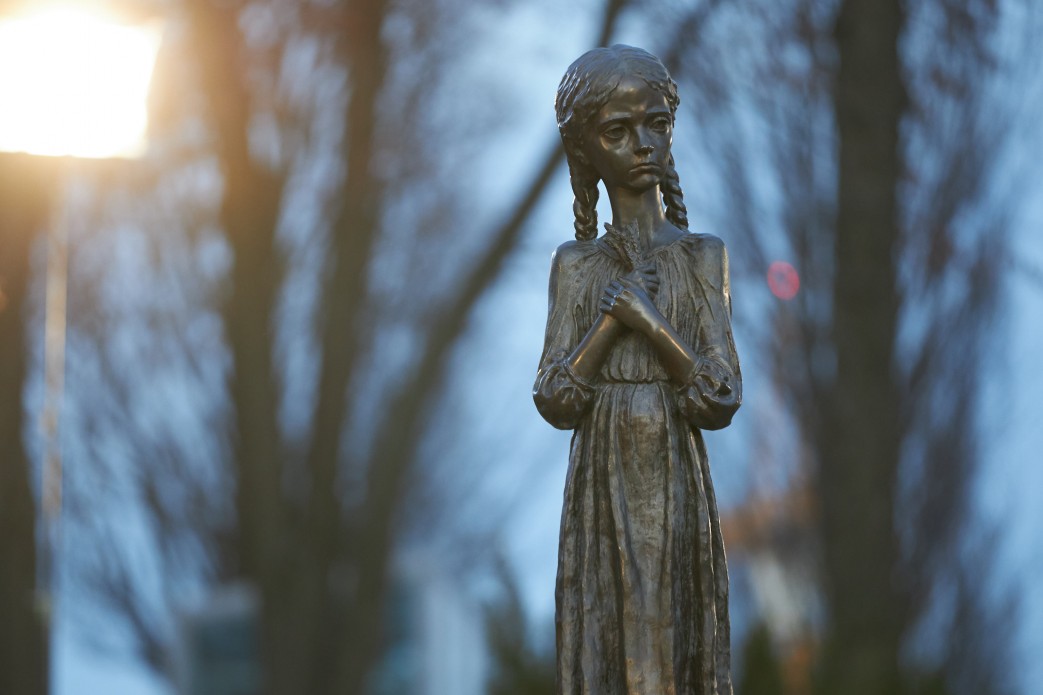
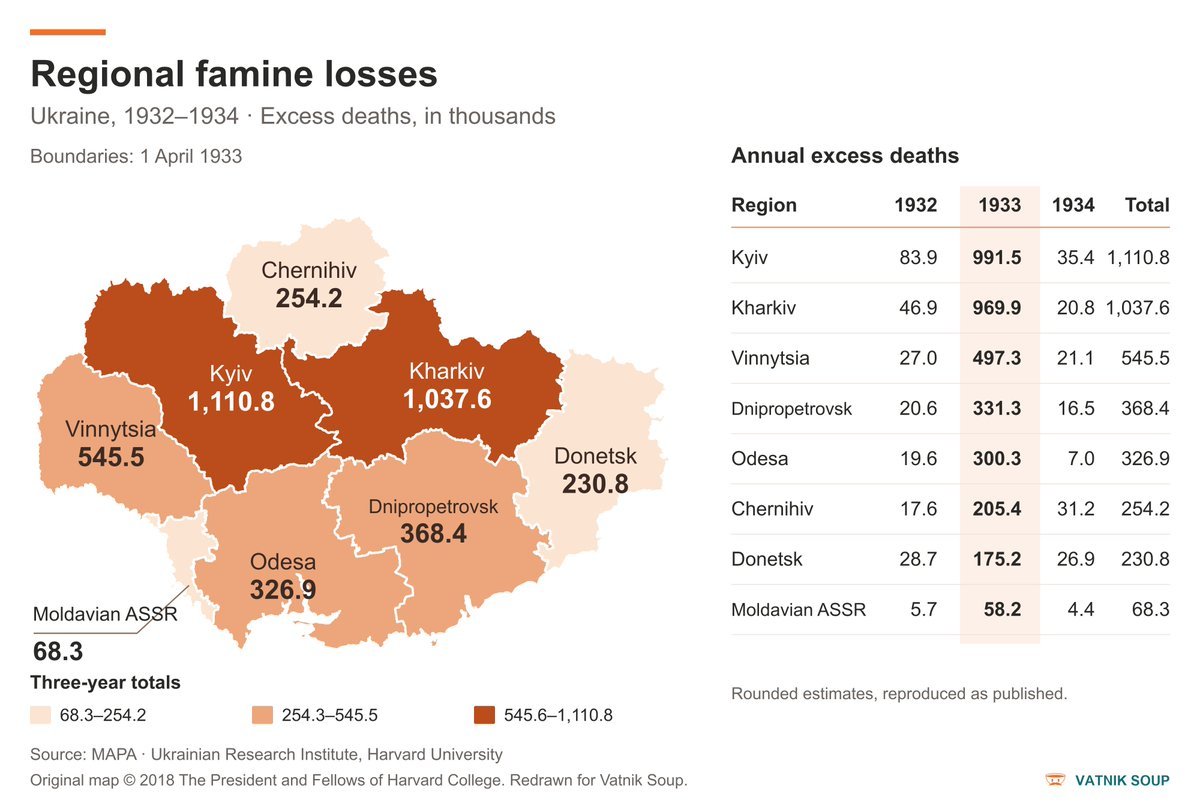
Millions died of hunger in a land known for its fertile soil. The Holodomor devastated communities across Soviet Ukraine and left a history that the authorities would spend decades trying to conceal.
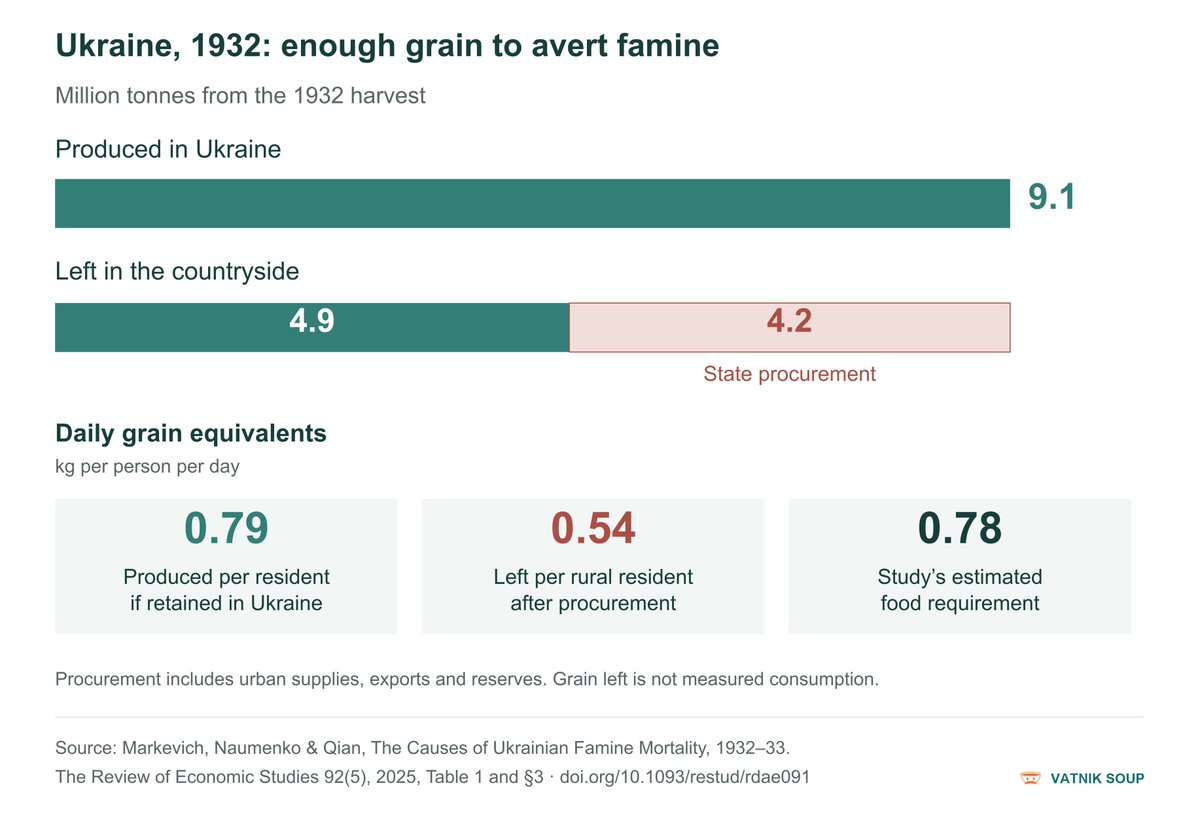
Under Stalin, forced collectivisation stripped peasants of their farms, livestock and control over their harvests. Grain requisitions and confiscations of other food left households without the means to survive.
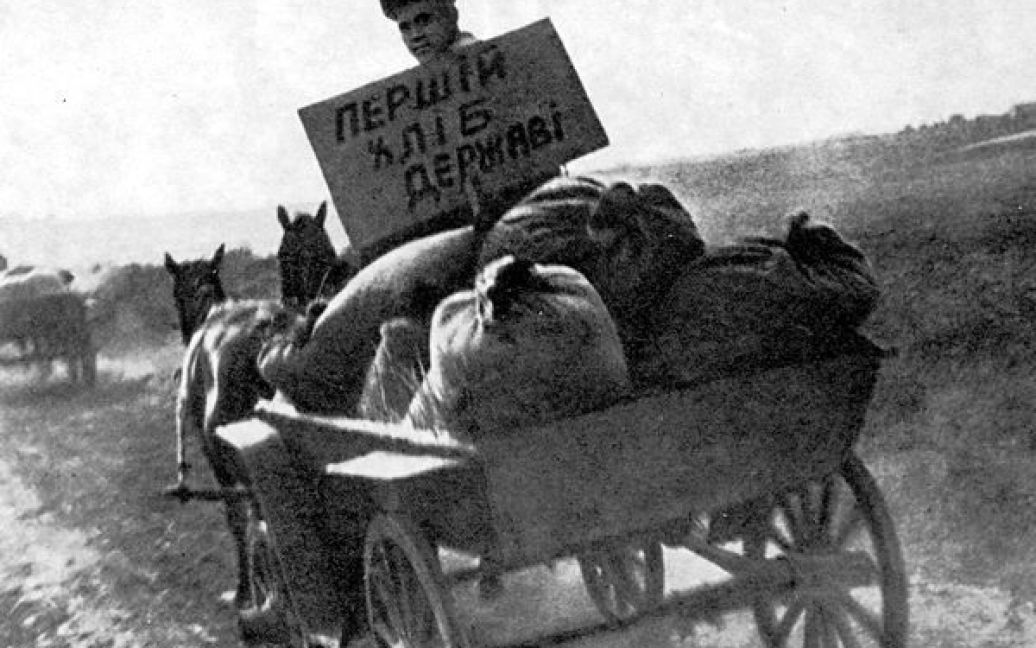
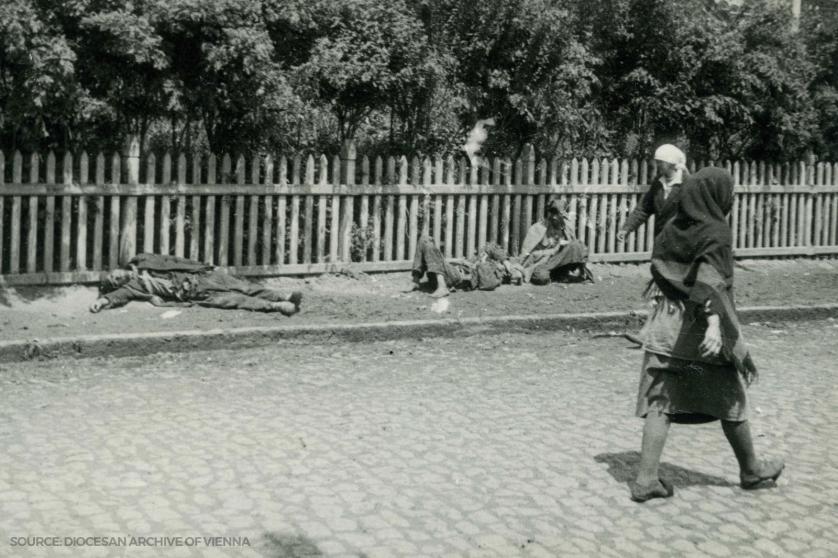
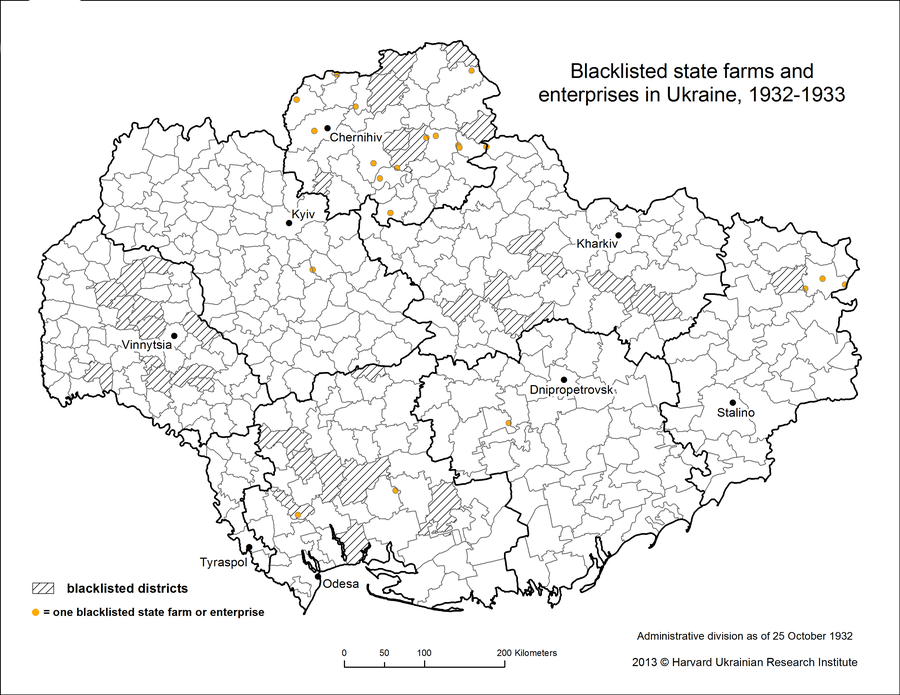
Villages were blacklisted. Trade was banned, supplies removed and food seized. Collective punishment deprived people of what they needed to live, as officials enforced procurement demands through coercion.
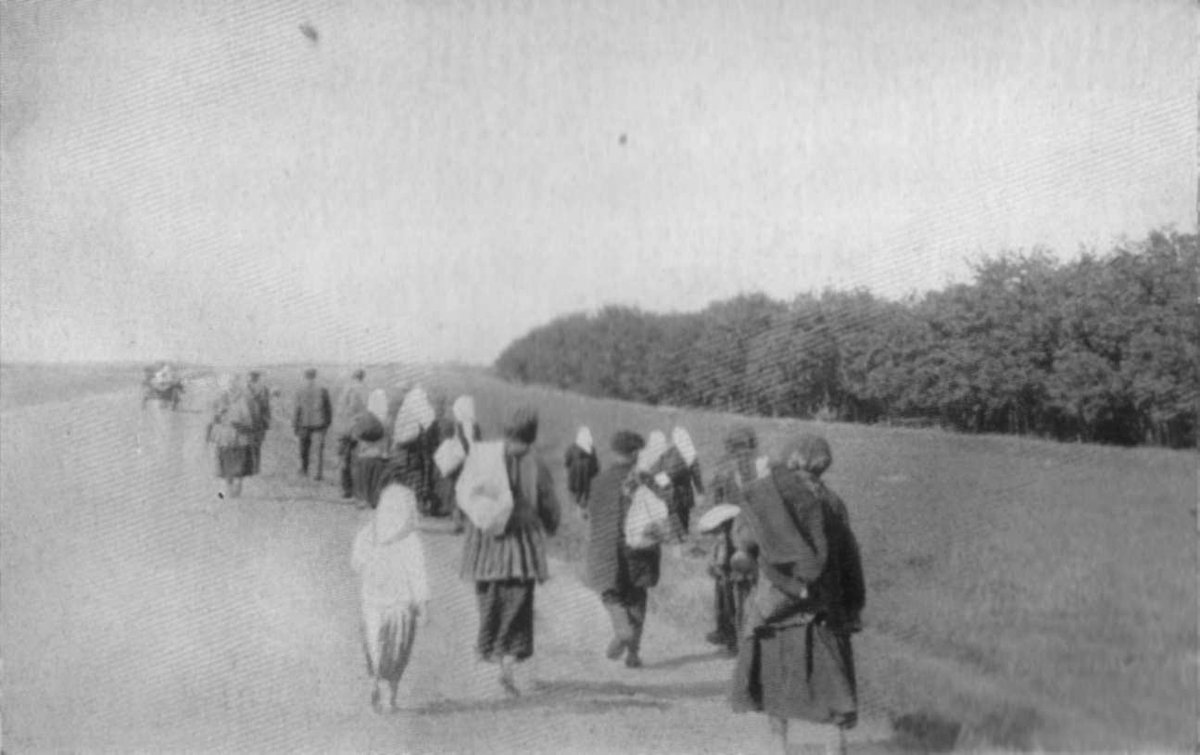
In January 1933, Stalin and Molotov ordered measures to stop peasants leaving Ukraine and the North Caucasus in search of food. People trying to escape starvation were intercepted and sent back.
The famine unfolded alongside attacks on Ukrainian writers, teachers, religious leaders and cultural institutions. Starvation and repression together devastated the communities sustaining Ukrainian national life.
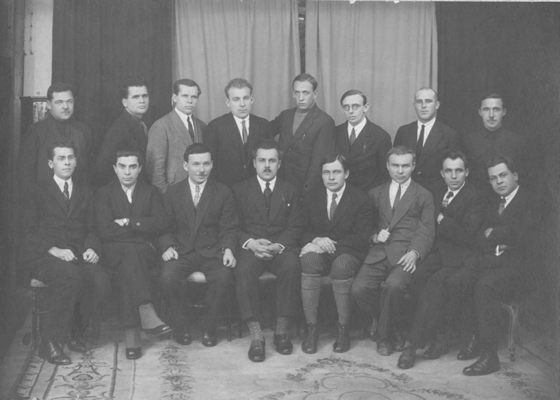
The Holodomor was genocide. Deliberate deprivation became an instrument in the assault on Ukrainian nationhood. Understanding that crime requires examining what the leadership knew, the decisions it took and the people it targeted.
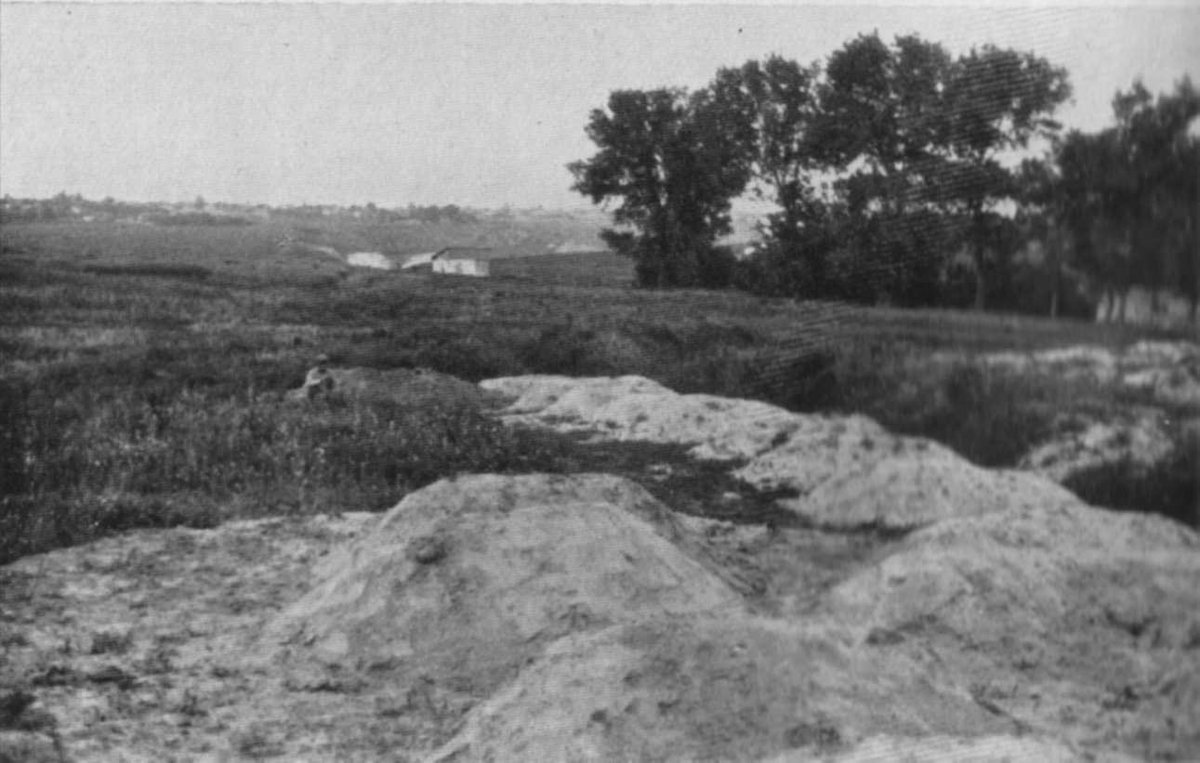
We examine forced collectivisation and central planning alongside authoritarianism and imperialism. Economic failure offers no alibi for the regime’s decisions to seize food, block escape and silence warnings while people starved.
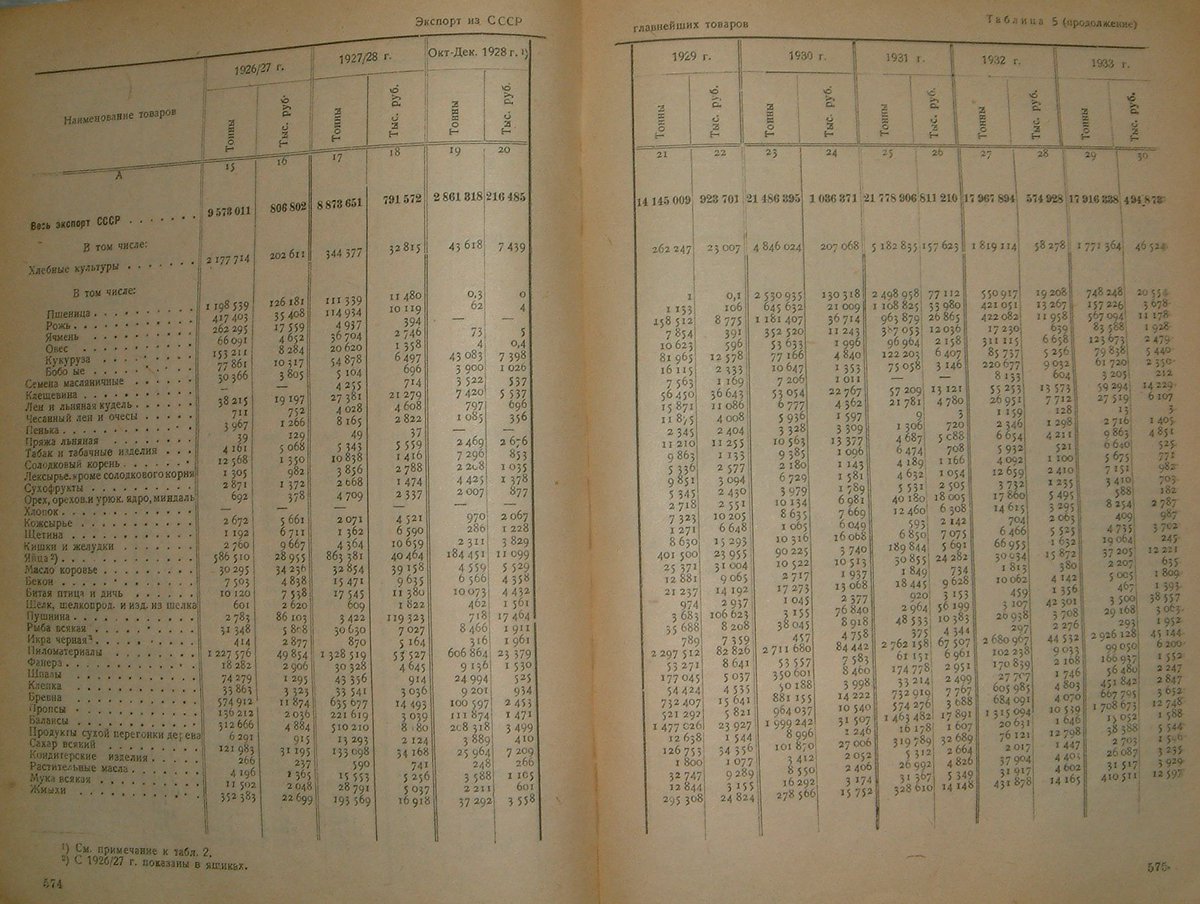
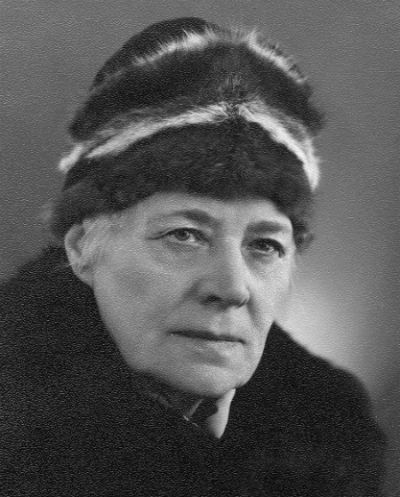
The Soviet authorities denied the famine. Gareth Jones and other witnesses challenged the official account. Walter Duranty, a proto-vatnik at The New York Times, minimised the catastrophe and excused the regime.
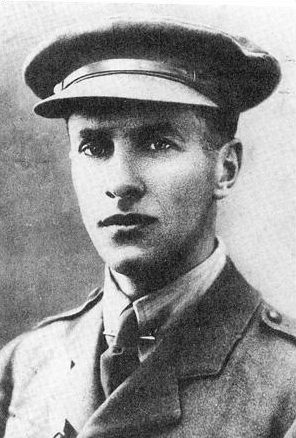
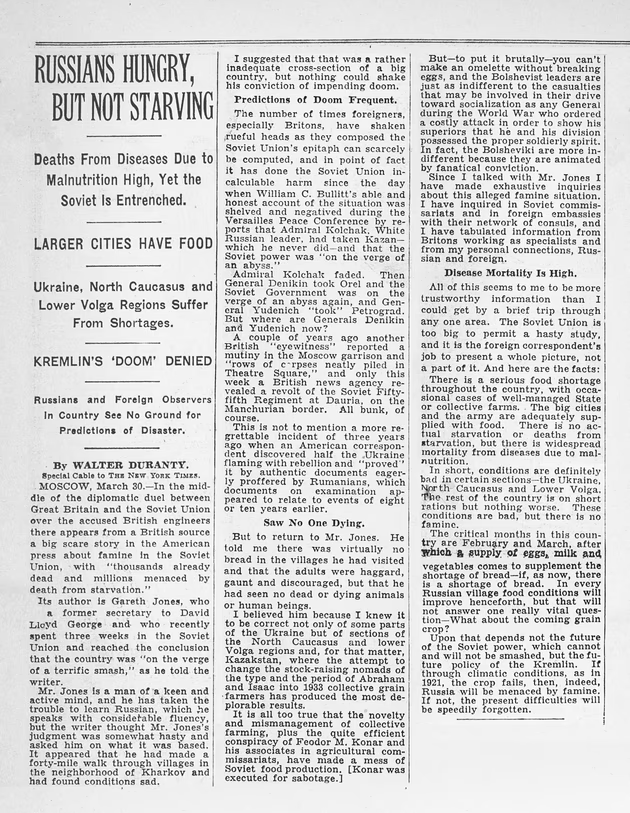
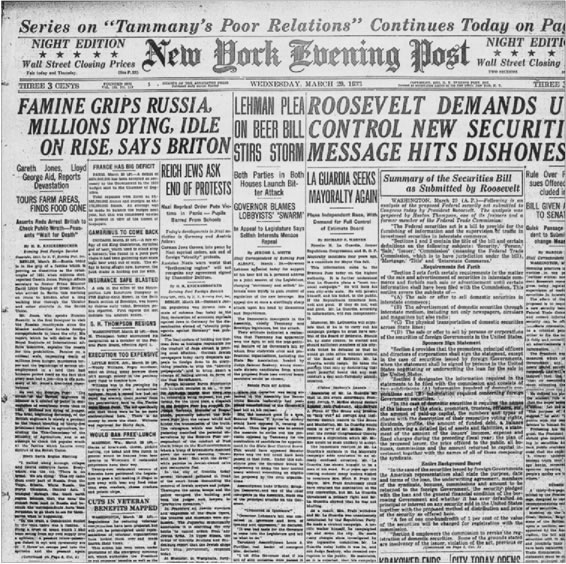
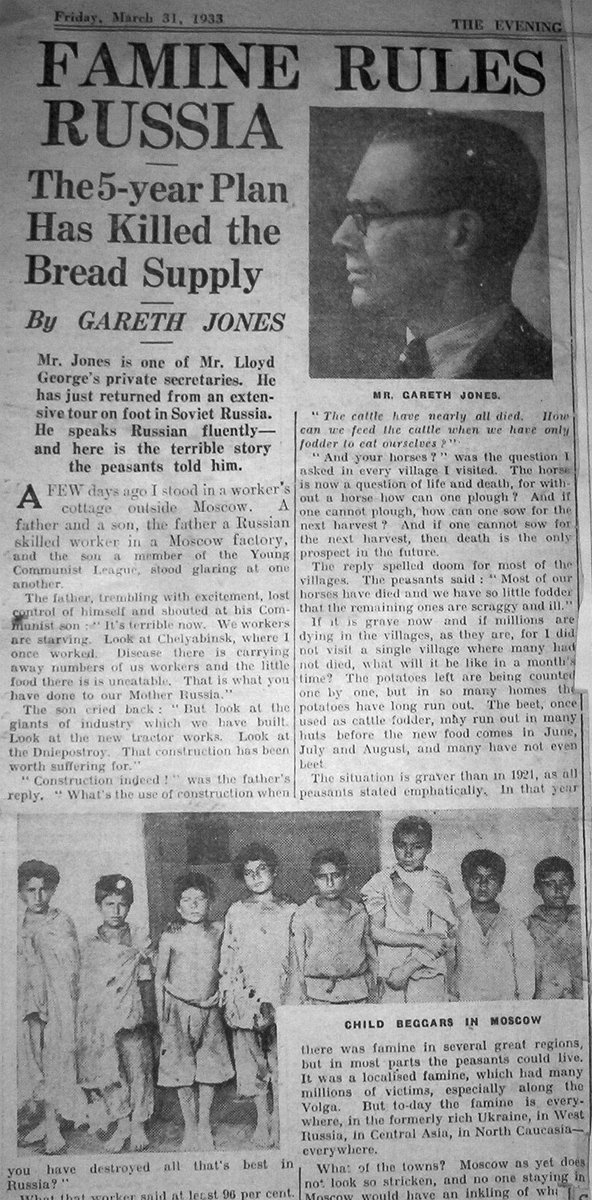
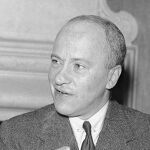 Walter Duranty
For decades, public discussion of the Holodomor was suppressed in the Soviet Union. Survivors, families and diaspora communities preserved its memory. Their accounts helped later generations recover a history the state had concealed.
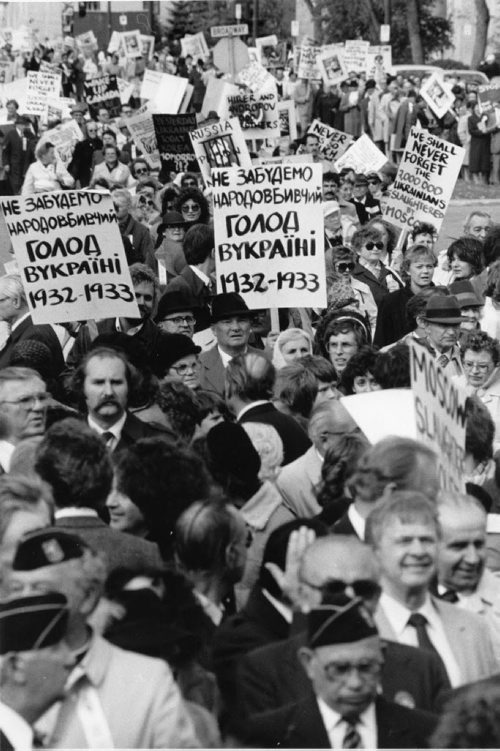
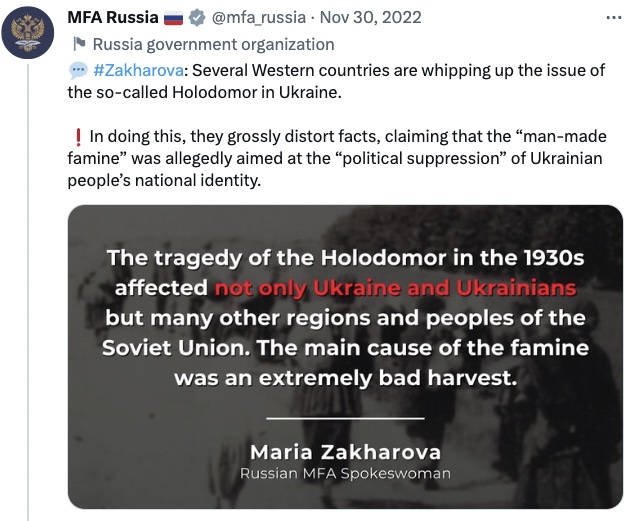
Russia still denies that the Holodomor was genocide while glorifying Stalin. In March 2026, its Foreign Ministry circulated a claim that the Holodomor was “fabricated”. A relief honouring Stalin returned to Moscow’s metro in 2025.
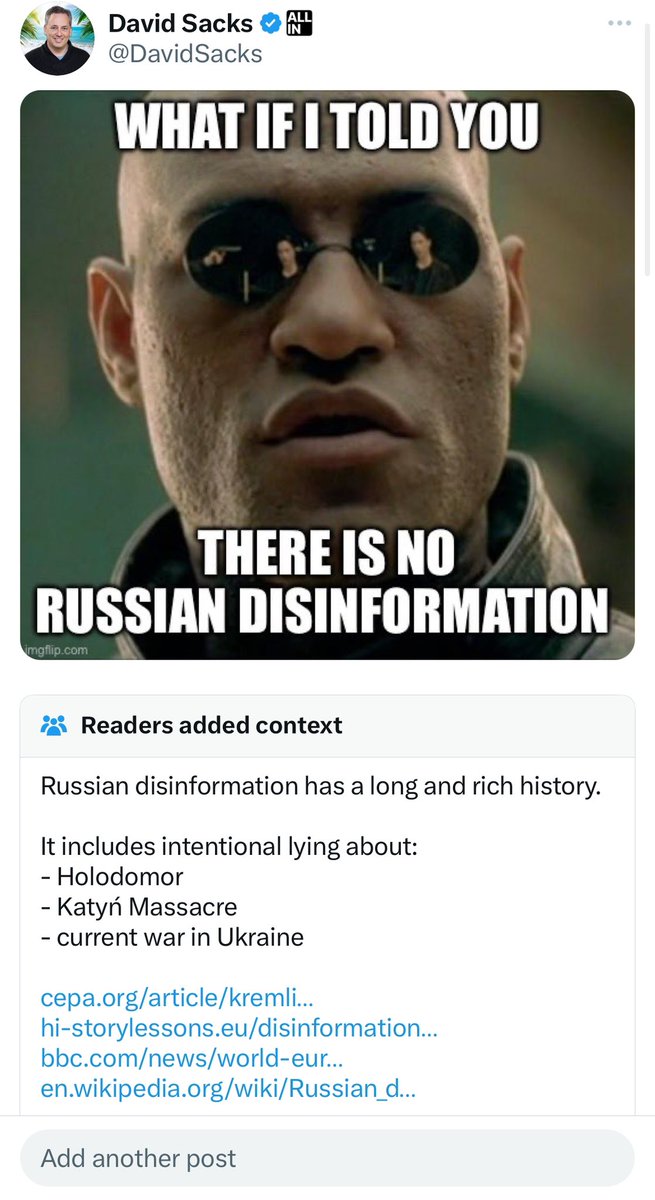
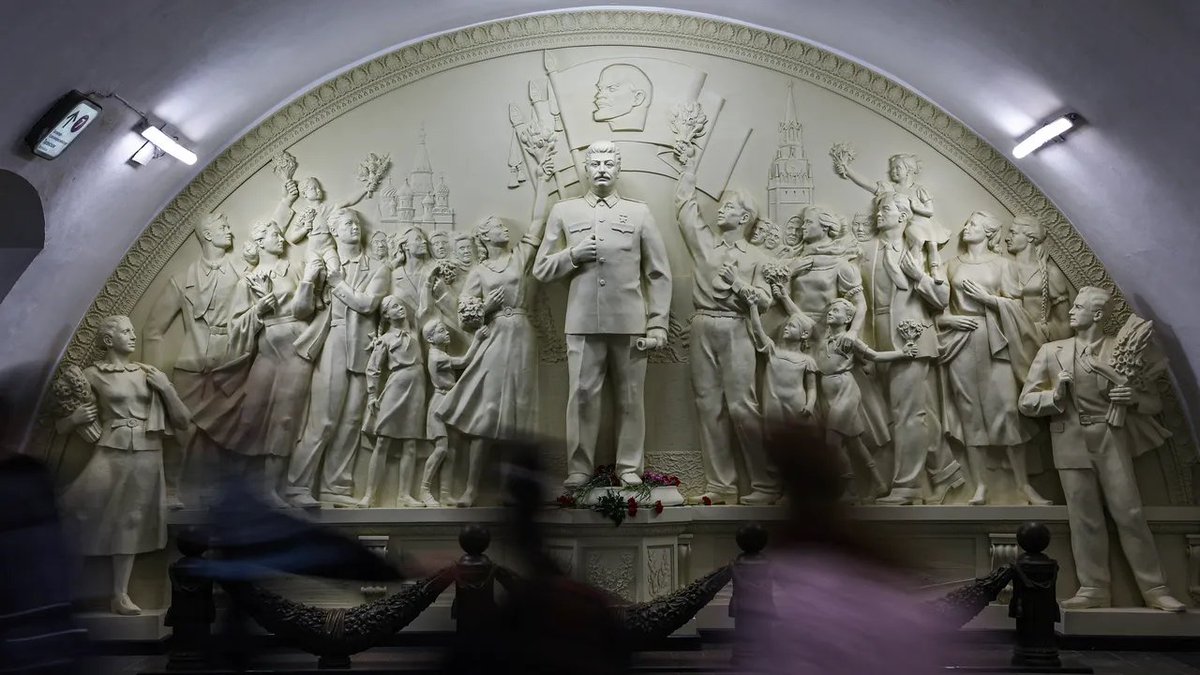
Ukraine marks this day while defending itself against Russia’s invasion. Remembrance honours the dead and affirms the right of Ukrainians to preserve their history, language and national life.
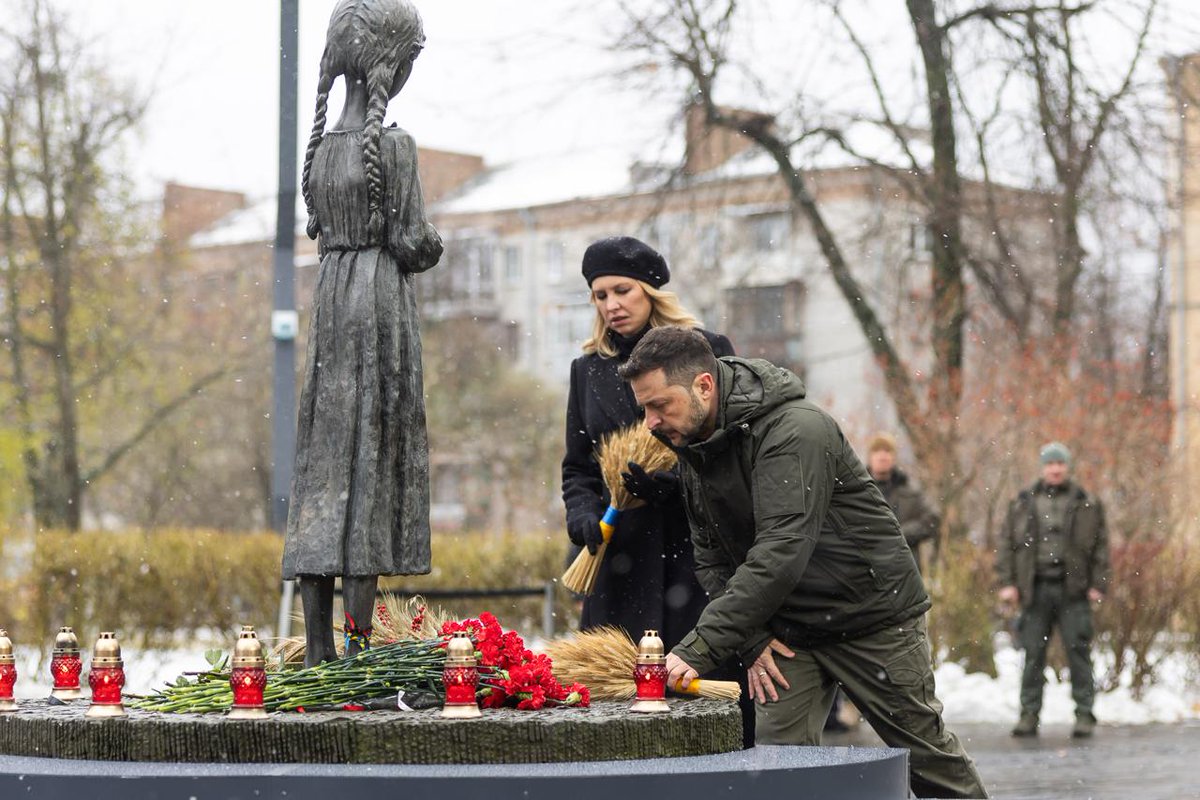
The dossier explores the Holodomor through history, economics and political thought, drawing connections with Russia’s war against Ukraine and the continuing struggle over Ukrainian identity and memory.
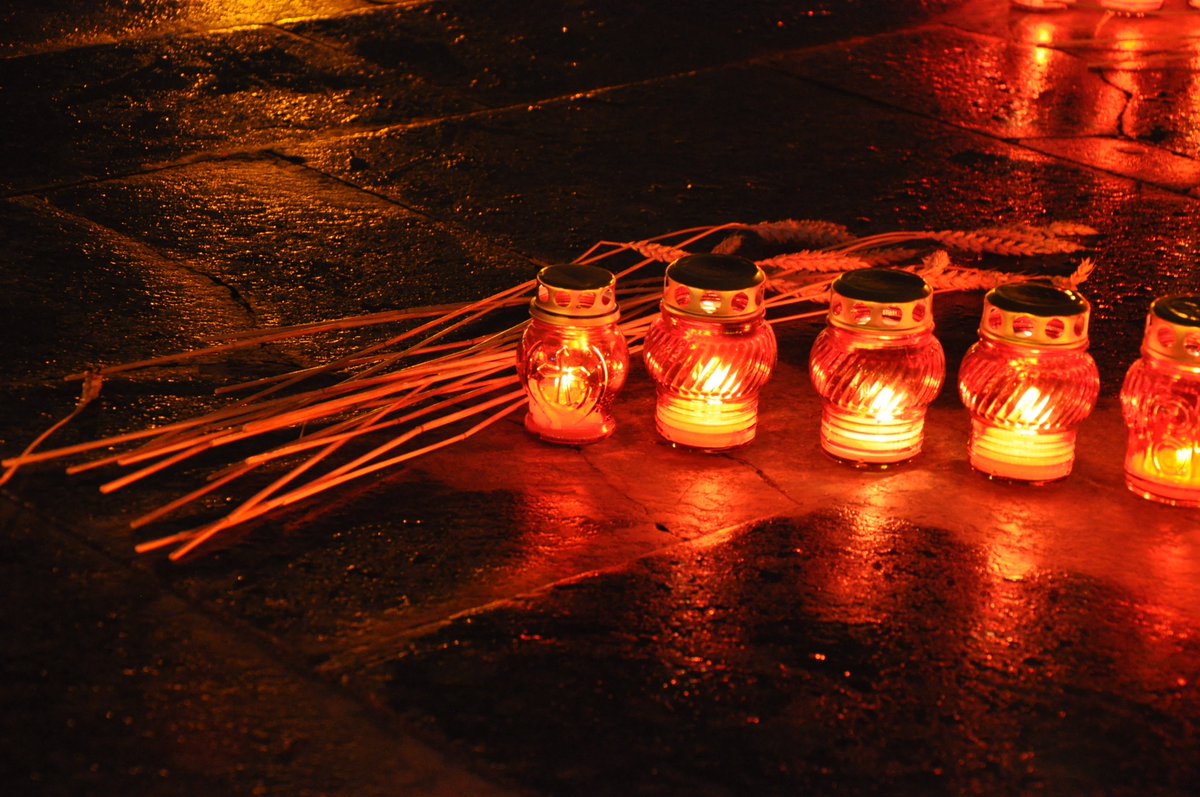
Read the full dossier:
The Holodomor Genocide: Starvation and the Erasure of a Nation.
Truth matters. History matters. Memory matters.
At Vatnik Soup, we conduct rigorous research and debunk Kremlin propaganda used to justify aggression and occupation, including reminders from history to combat vatnik revisionism.
Support our work:
 Fight Disinformation With Us: Support our Work | Vatnik Soup
More soup?
Articles
- Vatnik Soup, “The Holodomor Genocide”, X Articles, November 28, 2026 The Holodomor Genocide: Starvation and the Erasure of a Nation (PDF · EPUB)
Sources and further reading (631)
The Holodomor: historical overview (9)
- Holodomor Research and Education Consortium — Holodomor Basic Facts
- Ukrainian Institute of National Memory — “What is Holodomor” (English information booklet, p. 2)
- Canadian Institute of Ukrainian Studies, Internet Encyclopedia of Ukraine — Famine-Genocide of 1932–3
- Nataliya Kovalchuk — From a Person to a Genocide: The Origins of the Word Holodomor
- Український інститут національної пам’яті — Публікації: Бібліографія Голодоморів (uk)
- Ярослав Грицак — Етимологія Голодомору (uk)
- Ústav pro jazyk český — Slovník spisovného jazyka českého: hladomor (cs)
- Ottův slovník naučný — Hladomorna, sv. 11 (1897), s. 330 (cs)
- Павло Штепа — Знадібки до словника чужослів (Торонто, 1967), с. 26 (uk)
Orders, correspondence and primary documents (45)
- Holodomor Research and Education Consortium — Key Documents
- Bohdan Klid and Alexander J. Motyl, editors — The Holodomor Reader: Documents
- Bohdan Klid and Alexander J. Motyl, editors — The Holodomor Reader: Legal Assessments, including Raphael Lemkin’s Soviet Genocide in Ukraine (1953)
- Harvard Ukrainian Research Institute — MAPA: Sowing Grain Procurement, Loans and Stocks in Ukraine, 1932–1933
- Feigin to Sergo Ordzhonikidze, 9 April 1932 — Western Siberian collective farms, Library of Congress translation
- V. I. Lenin — Secret letter via Molotov to the Politburo on church valuables, 19 March 1922, Library of Congress translation
- Joseph Stalin — July 1928 plenum: “Industrialisation and the Grain Problem” (9 July) and “On the Bond Between the Workers and Peasants and on State Farms” (11 July), Works, volume 11
- Franklin D. Roosevelt and Maxim Litvinov — Memorandum of 15 November 1933, FRUS, The Soviet Union, 1933–1939, document 22, pp. 26–27
- R. Walton Moore to Francis B. Sayre — Memorandum of 19 July 1934, FRUS, The Soviet Union, 1933–1939, document 127, pp. 119–121
- Holodomor Education — Decree on Protection of Property, 7 August 1932
- Joseph Stalin — Letter to Lazar Kaganovich on changing the Ukrainian SSR leadership, 11 August 1932, HREC Education excerpt
- Joseph Stalin — “The Tasks of Business Executives”, speech of 4 February 1931, Works, volume 13
- German and Soviet governments — Secret Additional Protocol to the Nonaggression Treaty, 23 August 1939 (English translation)
- Friedrich-Werner von der Schulenburg — Telegram No. 190, 19 August 1939, transmitting the Soviet draft nonaggression pact
- Karl Schnurre — German Foreign Office memorandum of 26 February 1940 on the commercial agreement of 11 February 1940
- Italy and the USSR — Pact of Friendship, Non-Aggression and Neutrality, signed at Rome on 2 September 1933, League of Nations Treaty Series 148, no. 3418, pp. 319–329
- Council of People’s Commissars of the Ukrainian SSR and CC CP(B)U — resolution on blacklisting villages, 6 December 1932; Library of Congress translation
- Joseph Stalin — “To Comrade Kaganovich and the Other Members of the Political Bureau of the Central Committee, Ukraine C.P.(B.)”, letter of 26 April 1926, Works, volume 8, pp. 157–163 (Moscow, 1954)
- Joseph Stalin — “Congress of the Peoples of the Terek Region”, report and concluding remarks of 17 November 1920, Works, volume 4 (Moscow, 1953)
- Joseph Stalin — “The Immediate Tasks of the Party in the National Question”, theses of 10 February 1921, Works, volume 5 (Moscow, 1954)
- V. I. Lenin — Letter to Mikhail Frunze, 18 May 1921
- Library of Congress — Lenin’s telegram ordering public hangings in Penza, 11 August 1918
- Harvard Ukrainian Research Institute — Blacklisted Localities, MAPA Digital Atlas of Ukraine
- Vladimir Lenin — Draft resolution on party unity, Tenth Party Congress, March 1921
- Joseph Stalin — The Foundations of Leninism (1924), chapter VIII, The Party
- V. I. Lenin — To J. V. Stalin and all members of the Politburo, 26 August 1921; Collected Works, vol. 45, pp. 268–270
- House of Lords — Famine in Russia, 11 August 1921; Lord Emmott’s description of the Russian public relief committee, HL Deb vol. 43, cols. 508–509
- V. I. Lenin — Letter to D. I. Kursky, 17 May 1922; Collected Works, vol. 33, pp. 358–359
- TsUNKhU of Gosplan — СССР в цифрах [USSR in Figures] (Moscow, 1935), pp. 574–575: principal commodity exports (ru)
- Wikimedia / Russian Wikipedia — Export27-33.jpg, historical export-table file record (ru)
- USSR Council of People’s Commissars and Communist Party Central Committee — “On the Compulsory Delivery of Grain to the State by Collective Farms and Individual Households”, decree of 19 January 1933 (ru)
- Andrea Graziosi — Lettere da Kharkov. La carestia in Ucraina e nel Caucaso del Nord nei rapporti dei diplomatici italiani, 1932-33 (1991); University of Naples IRIS bibliographic record (it)
- СНК СССР и ЦК ВКП(б) — «Об обязательной поставке зерна государству колхозами и единоличными хозяйствами», 19 января 1933 г.; Электронная библиотека исторических документов (ru)
- V. I. Lenin — Note to V. M. Mikhailov with a draft Politburo resolution on food work in Ukraine, 9 November 1921 (ru)
- Council of People’s Commissars — On the Surrender of Arms, 10 December 1918, Article 933 and accompanying instruction (ru)
- All-Ukrainian Revolutionary Committee — Declaration on military policy in Ukraine, 22 January 1920, section 4 (ru)
- Bundesarchiv — Lipezk: secret Reichswehr aviation school and testing site, including the agreement of 15 April 1925 (de)
- German cabinet minutes, 2 October 1931 — Soviet timber, petrol and grain against German goods or credit (de)
- Stalin to Mikhail Sholokhov, 6 May 1933 — official archival record (ru)
- Внешняя торговля Союза Советских Социалистических Республик за первую пятилетку (за период с 1928 по 1933 г.) (1933), Table Va, p. 45; year-end supplement, pp. 96–97 (ru)
- Внешняя торговля СССР за 20 лет, 1918–1937 гг. (1939), pp. 86, 90, 94: Germany wheat, rye and barley (ru)
- Внешняя торговля СССР за 20 лет, 1918–1937 гг. (1939) — statistical definitions (ru)
- Политбюро ЦК ВКП(б) — Директивы к переговорам с Германией о расширении советского экспорта (15 октября 1931 г.), пп. 2–4 (ru)
- Народный комиссариат внешней торговли СССР — Докладная записка «Внешне-торговая политика СССР» (12 января 1934 г.), разделы I и III (Германия) (ru)
- U.S. Wheel Track Layer Corporation / Amtorg Trading Corporation — Гусенично-колесный танк «Кристи»: договор (28 апреля 1930 г.), преамбула и §§ 1, 9–10 (ru)
Human losses and geography (14)
- Harvard Ukrainian Research Institute — MAPA Great Famine Project
- Andrei Markevich, Natalya Naumenko and Nancy Qian — “The Causes of Ukrainian Famine Mortality, 1932–33”, Review of Economic Studies 92(5), October 2025, pp. 3276–3305
- Andrei Markevich, Natalya Naumenko and Nancy Qian — “The Causes of Ukrainian Famine Mortality, 1932–33”, author-linked published advance-access full text, DOI 10.1093/restud/rdae091 (2024)
- Andrei Markevich, Natalya Naumenko and Nancy Qian — “The Causes of Ukrainian Famine Mortality, 1932–33”, NBER Working Paper 29089, July 2021, revised November 2022; Yale-hosted copy
- Oleh Wolowyna, Nataliia Levchuk and Alla Kovbasiuk — “Monthly Distribution of 1933 Famine Losses in Soviet Ukraine and the Russian Soviet Republic at the Regional Level” (2020), Nationalities Papers 48(3), pp. 530–548
- Holodomor Research and Education Consortium — Conquest Prize2025: Markevich, Naumenko and Qian
- Omelian Rudnytskyi, Nataliia Levchuk, Oleh Wolowyna, Pavlo Shevchuk and Alla Kovbasiuk — Demography of a Man-Made Human Catastrophe: The Case of Massive Famine in Ukraine 1932–1933, Canadian Studies in Population 42, nos. 1–2 (2015), pp. 53–80
- Harvard Ukrainian Research Institute — MAPA, Total Direct Famine Losses in Ukraine by Region, 1932–1934
- Harvard Ukrainian Research Institute — MAPA, Demographic Research
- Nataliia Levchuk, Oleh Wolowyna, Omelian Rudnytskyi, Alla Kovbasiuk and Natalia Kulyk — Regional 1932–1933 Famine Losses: A Comparative Analysis of Ukraine and Russia, Nationalities Papers (2020)
- MAPA Digital Atlas of Ukraine — April1933 administrative division
- MAPA Digital Atlas of Ukraine — Sowing Grain Stocks Procurement Plan Fulfillment in Ukraine,1933
- Рудницький, Левчук, Воловина, Шевчук і Ковбасюк — Демографія штучно викликаної людської катастрофи: масовий голод 1932–1933 рр. в Україні (2015) (uk)
- Рудницький, Левчук, Воловина, Шевчук і Ковбасюк — Демографія штучно викликаної людської катастрофи, завершення українського перекладу, Демографія та соціальна економіка 3 (25), 2015, с. 43–63 (uk)
Mass-death events: comparison and estimates (36)
- R. J. Rummel — Death by Government, Table 1.5: Some Major Episodes and Cases of Democide
- World Peace Foundation — Historic Famines, 1870–2024: reference table (2025)
- World Health Organization — Plague: historical Black Death mortality in Europe
- Jeffery K. Taubenberger and David M. Morens / CDC — 1918 Influenza: the Mother of All Pandemics (2006)
- UNAIDS — Global HIV & AIDS statistics: 2025 data released in 2026
- World Health Organization — COVID-19-associated excess mortality in 2020 and 2021 (5 May 2022)
- United States Holocaust Memorial Museum — Introduction to the Holocaust
- Extraordinary Chambers in the Courts of Cambodia — Understanding the ECCC
- United States Holocaust Memorial Museum — Statement on the centenary of the Armenian genocide (2015)
- United States Holocaust Memorial Museum — Rwanda: genocide against the Tutsi
- United States Geological Survey — This Dynamic Planet: reported death toll of the 1556 Shaanxi earthquake
- Nicolas Werth / Sciences Po — Mass Crimes under Stalin, 1930–1953
- Our World in Data — Historical famine dataset: Great Hunger mortality in Ireland, citing Ó Gráda
- World Peace Foundation — Famine Datasets Methodological Annex (May 2025)
- United States Holocaust Memorial Museum — How Many People did the Nazis Murder?
- Erik van Ree — Problems of Communism: Gulag Authorities and Gulag Victims (2012)
- Israel Central Bureau of Statistics — On the Occasion of Holocaust Heroes and Remembrance Day: Jews in Israel and throughout the world (25 April 2022), release 133/2022
- United States Holocaust Memorial Museum — European Jewish population distribution, circa 1933
- H. G. W. Woodhead, editor — The China Year Book 1926–7, p. 3: 1923 postal estimates of provincial populations
- A. G. Wenley and John A. Pope — China, Smithsonian War Background Studies 20 (1944), p. 4: provincial populations from China Handbook 1937–43
- David Crockett Graham — Folk Religion in Southwest China, Smithsonian Miscellaneous Collections 142, no. 2 (1961), p. 15: early/mid-1930s provincial population estimates
- Angela Shpolberg — On the “Russo-American fever”: Henry Wadsworth Longfellow Dana and the Gorki Fund, The New England Quarterly 88, no. 3 (2015), pp. 509–526
- Tamás Krausz — The Characteristics of the Nazi Genocide in the Soviet Union and in Hungary: pre-invasion population of occupied territories
- Leo Amery — Population Statistics, House of Commons, 22 October 1942: Bengal’s population in the 1941 census
- Pierre van der Eng — Mortality from the 1944–1945 famine in Java, Indonesia, Asia-Pacific Economic History Review 64, no. 2 (2024), pp. 192–212, Table 3
- International Bank for Reconstruction and Development — The Polish Economy Today: population immediately before the Second World War
- United Nations — Report of the Group of Experts for Cambodia, A/53/850–S/1999/231 (16 March 1999), paragraph 35: April 1975 population estimates
- World Bank — Bangladesh: Current Economic Performance and Short-Term Prospects, report 1038-BD (22 March 1976), Table 1.1: population estimates at January 1, 1960–1980
- Anne Applebaum — Inside the Gulag (The New York Review of Books, 15 June 2000)
- Edwin Bacon — Glasnost’ and the Gulag: New Information on Soviet Forced Labour around World War II (Soviet Studies 44/6, 1992)
- National Bureau of Statistics of China — Historical population series, 1949–1999 (zh)
- Ministry of Human Resources and Social Security / NBS — China Labour Statistical Yearbook 2003, population and composition (end of year) (zh)
- S. N. Prokopovich — Народное хозяйство СССР, historical population table: pre-event Soviet-territory population in 1917 (ru)
- Ю. А. Поляков, editor — Население России в XX веке, том 2: 1940–1959 (2001), pp. 12–13: the June 1941 population reconstruction (ru)
- Первые зарубежные оценки динамики населения СССР между переписями 1926 и 1939 годов, Демоскоп Weekly (2025), Table 3: start-1930 population reconstructions (ru)
- Страна Советов за 50 лет — Численность населения СССР (Статистика, Москва, 1967, p. 15) (ru)
Other famines, the Hunger Plan and the Holocaust (38)
- Frank Dikötter — Mao’s Great Famine: The History of China’s Most Devastating Catastrophe, 1958–1962 (publisher page)
- United States Holocaust Memorial Museum — The German Army and the Racial Nature of the War against the Soviet Union
- United States Holocaust Memorial Museum — The Treatment of Soviet POWs: Starvation, Disease, and Shootings, June 1941–January 1942
- Hoover Institution Library & Archives — American Relief Administration in Soviet Russia: Introduction & Background
- Bertrand M. Patenaude — The Big Show in Bololand: The American Relief Expedition to Soviet Russia in the Famine of 1921
- John D. Hickerson / US Department of State — Memorandum to Robert A. Lovett, 27 May 1948: Postwar UNRRA aid (FRUS 1948, volume IV, document 589)
- Danielle Healy / Hoover Institution Library & Archives — A Delicate Balance in Ukraine
- Roman Serbyn — The First Man-Made Famine in Soviet Ukraine, 1921–1923, The Ukrainian Weekly (6 November 1988; archived)
- Andrij Makuch and Vasyl Markus — Famine of 1921–3, Internet Encyclopedia of Ukraine
- Andrij Makuch and Vasyl Markus — Famine of 1946–7, Internet Encyclopedia of Ukraine
- National Museum of the Holodomor — Famine of 21–23, exhibition (2018)
- National Museum of the Holodomor — Documentary and Photo Exhibition: Mass Famine of 1946–1947 in Soviet Ukraine (2016)
- Liberpedia — Holodomor (English research and source guide)
- Madi Kapparov — “Asharshylyk, Holodomor in Kazakhstan”, 48-post thread (14 October 2022), Thread Reader preservation
- Liberpedia — Asharshylyk
- Liberpedia — Famine in Moldova
- Stanford Global Studies — “The Moldavian Holodomor: The Great Famine in Soviet Moldova, 1946–1947”, event page
- International Military Tribunal — proceedings of 20 February 1946, presentation of the District Agricultural Leader’s File of 1 June 1941 (USSR-89)
- Hans-Joachim Riecke — testimony to the Ministries Case commission, 13 August 1948, transcript pp. 16025–16027
- Sarah Cameron — “The Hungry Steppe: Famine, Violence, and the Making of Soviet Kazakhstan”, lecture of 28 February 2019, edited transcript published 14 March 2019
- Sarah Cameron — The Kazakh Famine of the 1930s, Library of Congress interview (24 August 2016)
- Iaroslav Kovalchuk / Sarah Cameron — Mounting Socialism on Camel’s Back: An Interview with Sarah Cameron on the Famine in Kazakhstan (Commons, 22 November 2024)
- Niccolò Pianciola — Sacrificing the Qazaqs: The Stalinist Hierarchy of Consumption and the Great Famine of 1931–33 in Kazakhstan (2022)
- United States Holocaust Memorial Museum — Frequently Asked Questions about the Holocaust for Educators
- United States Holocaust Memorial Museum — “Final Solution”: Overview
- Dan Michman — Why Is the Shoah Called ‘the Shoah’ or ‘the Holocaust’? (2021)
- T4 Memorial — The registration form procedure
- Viktor Brack — Affidavit of 14 October 1946, introduced at the Doctors’ Trial on 16 December 1946
- United States Holocaust Memorial Museum — Euthanasia Program and Aktion T4
- Elena Volkava — The Kazakh Famine of 1930-33 and the Politics of History in the Post-Soviet Space (Sarah Cameron lecture report, Wilson Center, 2 May 2012)
- Національний музей Голодомору-геноциду — Голодомор-геноцид та масові штучні голоди: в чому різниця? (uk)
- Liberpedia — Holodomor (French research and source guide) (fr)
- Iryna Yehorova — Ukraine : 1947, l’autre famine, interview with Yevhen Hryniv, Courrier international (9 November 2012) (fr)
- Helmut Heiber, editor — “Der Generalplan Ost”, Vierteljahrshefte für Zeitgeschichte 6(3), July 1958, pp. 281–325; including Erhard Wetzel’s memorandum of 27 April 1942 (NG-2325) (de)
- Deutsches Historisches Museum — “Generalplan Ost”, LeMO (de)
- Z. E. Kabuldinov — “Голод среди казахов и массовые откочевки населения в начале 30-х годов XX века”, Qazaqstan tarihy (ru)
- Bundesarchiv — Rundschreiben der NSDAP-Partei-Kanzlei zur Versorgungslage im Herbst/Winter 1944 (document dated 14 December 1944; institutional contextual essay) (de)
- Isabelle Ohayon — La famine kazakhe : à l’origine de la sédentarisation (fr)
Genocide, democide and responsibility (31)
- R. J. Rummel — Death by Government (1994)
- R. J. Rummel — Lethal Politics: Soviet Genocide and Mass Murder Since 1917 (1990)
- R. J. Rummel — Statistics of Democide: Genocide and Mass Murder Since 1900 (1997)
- R. J. Rummel — Definition of Democide: Chapter 2 of Death by Government (1994)
- Bohdan Klid / Holodomor Research and Education Consortium — Was the Holodomor a Genocide? (HREC reproduction of a 2013 contribution)
- R. J. Rummel — Power Kills: Democracy as a Method of Nonviolence (Transaction Publishers, 1997)
- R. J. Rummel — “Why Does Power Kill?”, Power Kills, chapter 13
- United Nations Office on Genocide Prevention — Definitions of Genocide and Related Crimes, including Article II of the 1948 Convention
- Leon Trotsky — The Revolution Betrayed, chapter XI, section 2
- Leon Trotsky — The Revolution Betrayed: edition information
- International Spy Museum — Trotsky Ice Axe
- United States Holocaust Memorial Museum — Coining a Word and Championing a Cause: The Story of Raphael Lemkin
- House of the Wannsee Conference — Raphael Lemkin
- Center for Jewish History — Raphael Lemkin, Photograph 6, American Jewish Historical Society
- Wikimedia Commons — Raphael Lemkin, Photograph 6
- Institute of National Remembrance — The Katyn Massacre: Basic Facts (5 March 2020)
- US National Archives — Records Relating to the Katyn Forest Massacre
- Stalin to Churchill and Roosevelt, 22 August 1944 — FRUS 1944 III, document 1271
- Harriman to the Secretary of State, 22 August 1944 — FRUS 1944 III, document 1272
- Jennifer Popowycz — The Allied Responses to the Warsaw Uprising of 1944 (National WWII Museum, 18 January 2022)
- USHMM — The Warsaw Polish Uprising
- Eden — Russia and Poland, HC Deb 27 September 1944, vol. 403, cols. 217–220
- Institute of National Remembrance — What was the Polish Operation by the NKVD? (28 November 2017)
- Institute of National Remembrance — NKVD Order No. 00485: bilingual documentary exhibition catalogue
- National WWII Museum — The 1941 NKVD Prison Massacres in Western Ukraine (7 June 2021)
- Center for Urban History — City scum, nationalists or ordinary people: interethnic violence on the streets of Lviv
- Harriman to the Secretary of State, 18 June 1945 — FRUS 1945 V, document 262
- ICTY — Judicial Supplement49: Krstić appeal,19April2004
- United Nations Audiovisual Library of International Law — Convention on the Prevention and Punishment of the Crime of Genocide, introductory note
- Roberto Gutiérrez Alcalá, Gaceta UNAM — Hace 80 años murió asesinado León Trotski (18 August 2020) (es)
- Polish History Museum — Sowieci walczą o rząd. Dlaczego doszło do procesu szesnastu? (pl)
Soviet planning and economic calculation (85)
- Kyle Orton — Socialism Could Never Have a Human Face (21 August 2022)
- Ludwig von Mises — Economic Calculation in the Socialist Commonwealth (1920 essay; linked English edition, 1990)
- Ludwig von Mises — Socialism: An Economic and Sociological Analysis (German original, 1922; linked English edition, 1951)
- Jörg Guido Hülsmann — Mises: The Last Knight of Liberalism (2007)
- Center for Urban History, Lviv — Economics and Bureaucracy in an Open Society: 2011 conference programme
- Leszek Kołakowski — Main Currents of Marxism (especially Volume III: The Breakdown)
- Vasyl Marochko — “Torgsin”: The Price in Gold of the Lives of Ukrainian Peasants during the Famine Years (1932–1933), translated by Marta D. Olynyk
- Library of Congress / Historic American Engineering Record — Ford Assembly Plant, Rosie the Riveter National Historical Park, HAER CA-326-H, printed p. 28
- F. A. Hayek — Individualism and Economic Order
- F. A. Hayek — The Road to Serfdom
- F. A. Hayek — The Constitution of Liberty
- F. A. Hayek — The Use of Knowledge in Society, American Economic Review 35(4), September 1945, pp. 519–530
- Jörg Guido Hülsmann — Knowledge, Judgment, and the Use of Property, The Review of Austrian Economics 10(1), 1997, pp. 23–48
- Liberpedia — Impossibility of economic calculation in the socialist commonwealth
- F. A. Hayek — The Pretence of Knowledge, Nobel Prize lecture, 11 December 1974
- Nobel Foundation — The 1974 economics prize: Gunnar Myrdal and Friedrich August von Hayek
- Jacek Kochanowicz — Introduction to the 1990 edition of Mises’s Economic Calculation in the Socialist Commonwealth, reproducing Oskar Lange’s statue remark
- Leszek Balcerowicz — Poland’s Transformation, Finance & Development 37(3), September 2000
- Ludwig von Mises — Liberalism: In the Classical Tradition
- Ludwig von Mises — Human Action: A Treatise on Economics
- Ludwig von Mises — Memoirs (Arlene Oost-Zinner translation; Mises Institute, 2009; manuscript, 1940–42; first published, 1978)
- Oscar Mata — The Secret Passage: How Amzalak and Salazar Helped Ludwig von Mises Escape the Nazis (Mises Wire, 6 December 2024)
- Vatnik Soup — Switzerland’s Neutrality Initiative: Neutrality, Sovereignty and the September 2026 Vote (NAFO Policy Papers, No. 1, September 2026)
- Amartya Sen — Poverty and Famines: An Essay on Entitlement and Deprivation (1981)
- Amartya Sen — Development as Freedom (1999)
- Jean Drèze and Amartya Sen — Hunger and Public Action (1989)
- Amartya Sen — Democracy as a Universal Value, Journal of Democracy 10(3), July 1999, pp. 3–17
- Royal Swedish Academy of Sciences — The 1998 Prize in Economic Sciences: Amartya Sen, press release, 14 October 1998
- R. W. Davies and Stephen G. Wheatcroft — “The Livestock Disaster”, The Years of Hunger, pp. 301–331
- Stephen Kotkin — “If Stalin Had Died…”, The New York Review of Books, 6 November 2014
- Robert C. Allen — Farm to Factory: A Reinterpretation of the Soviet Industrial Revolution (Princeton University Press, 2003)
- Yoram Gorlizki — “Scandal in Riazan: Networks of Trust and the Social Dynamics of Deception”, Kritika 14(2), 2013, pp. 243–278
- F. A. Hayek — Why the Worst Get on Top, The Road to Serfdom, chapter X (1944; online excerpt)
- Nikolai Bukharin — “Observations of an Economist: The Beginning of the New Economic Year” (International Press Correspondence, 19 October and 2 November 1928)
- Joseph Stalin — “The Right Deviation in the C.P.S.U.(B.)” (April 1929), Works, volume 12, pp. 1–113 (Moscow, 1954)
- Joseph Stalin — “Grain Procurements and the Prospects for the Development of Agriculture” (brief record of Siberian statements, January 1928), Works, volume 11 (Moscow, 1954)
- V. I. Lenin — The Agrarian Programme of Social-Democracy in the First Russian Revolution, 1905–1907: Conclusion (1907)
- Joseph Stalin — Economic Problems of Socialism in the U.S.S.R. (1952), §2: Commodity Production Under Socialism
- Yoram Gorlizki — “Scandal in Riazan: Networks of Trust and the Social Dynamics of Deception”, Kritika 14(2), 2013, pp. 243–278: opening passage reproduced on ResearchGate
- Takeshi Hayashi — Historical background of technology transfer, transformation, and development in Japan (1979)
- Committee of the Tokio General Chamber of Commerce — Report on treaty revision, enclosed in John A. Bingham to William M. Evarts, 24 October 1879 (FRUS 1880, No. 422)
- Library of Congress — Revelations from the Russian Archives: “Collectivization and Industrialization”
- Joseph Stalin — “The Work of the April Joint Plenum of the Central Committee and Central Control Commission”, report of 13 April 1928
- Joseph Stalin — “On the Grain Front”, talk of 28 May 1928, published in Pravda on 2 June 1928
- Elena Osokina — “Torgsin and Stalin’s Quest for Gold”, Cornell University Press
- Liudmyla Hrynevych — “Stalin’s Faminogenic Policies in Ukraine: The Imperial Discourse”, East/West: Journal of Ukrainian Studies 8, no. 1 (2021), pp. 99–143, translated by Andrew Sorokowski
- Mark Harrison — review of Robert C. Allen’s Farm to Factory: A Reinterpretation of the Soviet Industrial Revolution, 6 May 2004, pp. 1–3
- Joseph Stalin — “National Factors in Party and State Affairs”, theses for the Twelfth Party Congress, published 24 March 1923, Works, volume 5 (Moscow, 1954)
- Jörg Guido Hülsmann — “Knowledge, Judgment, and the Use of Property”, The Review of Austrian Economics 10, no. 1 (1997), pp. 23–48; readable HTML edition
- Elena Osokina — Stalin’s Quest for Gold: The Torgsin Hard-Currency Shops and Soviet Industrialization, Cornell University Press, English digital edition (2021), JSTOR open-access edition
- V. I. Lenin — The Tax in Kind, completed 21 April 1921
- Joseph Stalin — The Results of the First Five-Year Plan, report of 7 January 1933
- London School of Economics — Friedrich A. von Hayek at LSE, 26 June 2024
- LSE / STICERD — What Goes Around Comes Around: wartime evacuation and intellectual history
- Bruce Caldwell — Introduction to The Road to Serfdom, University of Chicago Press
- F. A. Hayek — Nobel Banquet Speech, 10 December 1974, authorised republication
- Bogdan Sekściński — “Methods of Collectivization of Agriculture in the Lublin Region in the Years 1950–1951” (Studia Iuridica Lublinensia 19, 2013)
- Dean Rusk — Memorandum to John F. Kennedy on Poland and PL 480 (15 November 1961), FRUS 1961–1963, XVI, document 47
- Nigel Swain — Collective Farms Which Work? (Cambridge University Press), chapter 1, “Family Labour in the Achievement and Consolidation of Collectivised Agriculture, 1946–68”
- US Department of State — Assessment of Hungary’s New Economic Mechanism and agriculture (FRUS 1981–1988, vol. X, document 330)
- Paul Gregory — “An Introduction to the Economics of the Gulag”, in The Economics of Forced Labor: The Soviet Gulag (2003)
- The Henry Ford — “Assembly Line at Ford Motor Company Moscow Plant, 1930”, THF25098, object P.O.5827
- University of Victoria Libraries — Reeling Silk in Large Skeins, Japan c. 1910 (Wikimedia Commons image record)
- Mark Harrison — Five-Year Plan, Encyclopedia of Modern Europe: Europe Since 1914 (2006), pp. 1097–1101
- Mark Harrison — Soviet Industrial Production, 1928 to 1955: Real Growth and Hidden Inflation, Journal of Comparative Economics 28:1 (2000), pp. 134–155
- Mises Institute / DickClarkMises — Friedrich August von Hayek (undated portrait)
- George Orwell — Nineteen Eighty-Four (1949), part III, chapter IV
- Eugene Lyons — Assignment in Utopia (1937), “Two Plus Two Equals Five”, book II, chapter XV, p. 240; selected passage reproduced by Readex
- George Orwell — Review of Assignment in Utopia by Eugene Lyons, New English Weekly, 9 June 1938
- George Orwell — Review of Bertrand Russell’s Power, The Adelphi, January 1939; reprinted in Bertrand Russell Society Quarterly 130–131, pp. 38–40
- Mises Institute — Economic Calculation in the Socialist Commonwealth, 2014 edition
- Elke Wetzig — Amartya Sen in Cologne, 28 November 2007 (photograph)
- Oxford University Press — Poverty and Famines (publisher listing and cover)
- Vintage / Penguin Random House — Development as Freedom, 2000 paperback (cover)
- Glamorgan Archives — Hughes’s ironworks and the New Russia Company, 1868–1872
- FRUS — NSC discussion of Soviet wheat purchases, 1 October 1963
- Ludwig von Mises — Omnipotent Government: The Rise of the Total State and Total War (1944)
- Фотографії старого Львова — Меморіальна дошка Людвіга фон Мізеса: photograph dated 2015 (uk)
- Liberpédia — Impossibilité du calcul économique en régime socialiste (fr)
- University of Graz, Graz Schumpeter Centre — Ludwig Mises und das Wiener Privatarchiv (de)
- Hungarian historical encyclopedia — “A mezőgazdaság helyzete és arányai a nemzetgazdaságban” (Hungary in the Twentieth Century) (hu)
- Hungarian National Archives — “A Kádár-korszak”, Pest County archive dossier (hu)
- Russian State Library / Wikimedia Commons — Кто кого? Догнать и перегнать, First AKhR Collective, poster [1929] (ru)
- Yakov Guminer — Arithmetic of an industrial-financial counter-plan, 1931 (poster record) (en; ru)
- P. V. Alabin Museum — Soviet political posters, 1917–1967; Arithmetic of the counter-plan, 1931 (ru)
Genocidal intent and recognition (9)
- Nicolas Werth / Sciences Po — The Great Ukrainian Famine of 1932–33 (2008)
- European Parliament — Resolution of 15 December 2022 recognising the Holodomor as genocide
- Yad Vashem, Shoah Resource Center — Stalin and postwar antisemitic campaigns
- Holodomor Research and Education Consortium — Conquest Prize for Contribution to Holodomor Studies: 2025 award to Markevich, Naumenko and Qian
- National Museum of the Holodomor-Genocide — The History of the Holodomor
- Bohdan Klid and Alexander J. Motyl — Introduction to The Holodomor Reader (CIUS Press, 2012), publisher excerpt
- Norman M. Naimark — “How the Holodomor Can Be Integrated into our Understanding of Genocide”, East/West: Journal of Ukrainian Studies 2, no. 1 (2015), pp. 117–131
- International Criminal Tribunal for the former Yugoslavia — Prosecutor v. Goran Jelisić, IT-95-10-A, Appeals Chamber judgment, 5 July 2001, paragraphs 46–49
- Serhii Kornovenko and Oleksii Kompaniiets — The Policy of “Disarmament” as the Premise of Subjugation of the Ukrainian Countryside, East European Historical Bulletin 31 (2024), pp. 89–99
Witnesses, reporting and denial (59)
- Vatnik Soup — “MICE” (Soup 183, 21 May 2023)
- Gareth Jones — Berlin press release, 29 March 1933, as reported in the New York Evening Post
- Bohdan Klid and Alexander J. Motyl, editors — The Holodomor Reader: Survivor Testimonies, Memoirs, Diaries and Letters
- Russian Embassy in the United States — Statement of 25 November 2023, reproduced by the Baltimore Council on Foreign Affairs on 26 November
- Alexander Wienerberger / Wikimedia Commons — Girl and goat in Kharkiv, 1933: photograph and reuse record
- HREC Education — Historical Photographs of the Holodomor: Wienerberger authentication and context
- Tamara Orlova / HREC sourcebook — Childhood memoir, published in The Day (2010), excerpt on p. 43
- Vasyl Lypkivsky — Letters during the Holodomor (1933), HREC primary-source collection
- US Department of State — Foreign Relations of the United States, The Soviet Union, 1933–1939: Recognition on 16 November 1933 (documents 1–59)
- HREC / Ukrainian Canadian Congress — 85th-anniversary Holodomor educational material (29 August 2018)
- The Pulitzer Prizes — Walter Duranty, 1932 winner in Correspondence
- The Pulitzer Prize Board — Statement on Walter Duranty’s 1932 Prize (21 November 2003)
- Walter Duranty — Russians Hungry, But Not Starving, The New York Times (31 March 1933; archived transcription)
- Walter Duranty — Soviet Industry Shows Big Gains, The New York Times (6 April 1933; archived transcription)
- Gareth Jones — Mr. Jones Replies, letter to The New York Times (13 May 1933; archived transcription)
- Stephen Koch — Interview with Derek Alger, Pif Magazine (1 April 2004)
- Sean McMeekin — The Red Millionaire: A Political Biography of Willi Münzenberg, Moscow’s Secret Propaganda Tsar in the West (Yale University Press, 2003)
- Marco Carynnyk — The New York Times and the Great Famine, The Ukrainian Weekly (11 September 1983)
- Eugene Lyons — Assignment in Utopia (Harcourt, Brace, 1937): Moscow press corps and Gareth Jones
- Duchess of Atholl and others — Foreign Office debate, House of Commons (5 July 1933)
- Lord Ponsonby and Earl Stanhope — Russia debate, House of Lords (25 July 1934)
- US Department of State, Office of the Historian — Recognition of the Soviet Union, 1933
- Maxim Gorky, L. Averbakh and S. G. Firin, editors — Belomor: An Account of the Construction of the New Canal Between the White Sea and the Baltic Sea (English adaptation, 1935)
- H. R. Knickerbocker — Famine Grips Russia, New York Evening Post (29 March 1933): Gareth Jones’s statement
- Gareth Jones — Famine Rules Russia, Evening Standard (31 March 1933)
- Walter Duranty — Portrait published in The Literary Digest History of the War (1919), Wikimedia Commons record
- S. J. Taylor — Stalin’s Apologist: Walter Duranty, The New York Times’s Man in Moscow (Oxford University Press, 1990), publisher preview
- Walter Duranty — Russians Hungry, But Not Starving, The New York Times (31 March 1933), p. 13; original publisher page
- Ray Gamache — “Contextualizing FDR’s Campaign to Recognize the Soviet Union, 1932–1933: Propaganda, Famine Denial, and Ukrainian Resistance”, Harvard Ukrainian Studies 37, nos. 3–4 (2020), pp. 287–321
- Time — “Foreign News: Stalin to Duranty” (8 January 1934)
- US National Park Service — Arthurdale: A New Deal Community Experiment (Teaching with Historic Places, lesson 157), especially readings 1–2
- US Commission on the Ukraine Famine — Investigation of the Ukrainian Famine, 1932–1933: Report to Congress (22 April 1988), chapter VI, “The American Response to the Famine”, excerpt pp. 167–176
- Louis Fischer — “Hearst’s Russian Famine”, The Nation (13 March 1935), datelined New York, 4 March
- Stanislav Kulchytsky — “Why Did Stalin Exterminate the Ukrainians? Comprehending the Holodomor. The Position of Soviet Historians” (2005), reproduced in The Holodomor Reader, scholarship extract, printed pp. 26–30
- Beatrice Webb — typescript diary, entry of 9 April 1932, PASSFIELD/1/2/10, LSE Digital Library
- Jars Balan — “Rhea Clyman: A Forgotten Canadian Eyewitness to the Hunger of 1932”, in Women and the Holodomor-Genocide: Victims, Survivors, Perpetrators, edited by Victoria Malko, 2019
- Rhea G. Clyman — “Children Lived on Grass / Only Food in Farm Area / Grain Taken From Them”, Toronto Evening Telegram, 16 May 1933, pp. 1, 36; transcription in Jars Balan’s Ukraina Moderna documentary selection
- David Vessey — “First-hand Accounts? Walter Duranty, William Henry Chamberlin and Eugene Lyons as Moscow Correspondents in the 1930s”, Journalism Studies 24, no. 2 (2023), pp. 209–225
- William Henry Chamberlin — “Famine proves potent weapon in Soviet policy”, Christian Science Monitor, 29 May 1934; reprint in The Ukrainian Weekly (1983)
- Natalia A. Feduschak — “New Chapters in the Ukrainian-Jewish Relationship Explored at Canada’s Limmud FSU (Part 1) – Rhea Clyman”, Ukrainian Jewish Encounter, 19 April 2017
- Jars Balan — 2017 Toronto Annual Famine Lecture, “Tell the Kremlin we are starving; we have no bread!” Rhea Clyman’s 1932 Odyssey through the “Famine Lands” of Ukraine, 28 November 2017; HREC event record
- A. Markoff — Famine in USSR (Paris: Russian Commercial Institute, 1933)
- Maxim Gorky, L. Averbakh and S. G. Firin, editors; Amabel Williams-Ellis, English editor — Belomor (1935), digitised English text
- Merriam-Webster — Fellow traveler: definition and word history
- Vatnik Soup — Debunk of the Day 4: Whataboutism (1 February 2026)
- Aleksandr Volgarev — On the Holodomor in Ukraine, statement at the OSCE Permanent Council, 24 November 2022
- Russian Ministry of Foreign Affairs — Holodomor statement attributed to Maria Zakharova, 30 November 2022
- British Council UK Films Database — Mr. Jones (2019), film credits and synopsis
- WestEnd Films — Mr. Jones (2019), official distributor synopsis
- Oni Press — In the Shadow of Stalin: The Story of Mr. Jones, by Andrea Chalupa and Ivan Rodrigues (2024)
- Samuel Goldwyn Films — Mr. Jones: official press materials and theatrical poster
- Tatyana Smykovskaya — Личность и творчество Максима Горького на страницах прессы Гулага 1930-х годов [Gorky and the Gulag Press], Australian Slavonic and East European Studies 38 (2024), pp. 1–25 (ru)
- National Museum of the Holodomor-Genocide — “Історія, збережена у «цифрі»”: оцифровано аудіокасети зі свідченнями про Голодомор (25 June 2025) (uk)
- Ukrainian Institute of National Memory — 1915 – народився Микола Лемик, член ОУН (uk)
- Volodymyr Birchak — Убити одного, щоб врятувати мільйони. Атентат Миколи Лемика (21 October 2018) (uk)
- Ewald Ammende — Muss Russland hungern? Menschen- und Völkerschicksale in der Sowjetunion (Vienna, 1935), photographs 10 and 20 (de)
- Maxim Gorky, L. Averbakh and S. G. Firin, editors — Беломорско-Балтийский канал им. Сталина: История строительства (1934), Russian State Library catalogue (ru)
- Yurko Romanovych Shvets — Letter to Hryhorii Petrovsky on procurement and hunger, September 1932 (Ukrainian transcription) (uk)
- Ukrainian state archives / TsDAVO — Register of documentary heritage, fond 1, entry 176: letter of Yu. R. Shvets, 15 September 1932 (uk)
The erasure of Ukrainian statehood and culture (137)
- Kathryn David — “At the Kremlin in 1943” / “How Stalin enlisted the Orthodox Church to help control Ukraine”, Aeon (13 March 2023)
- International Criminal Court, Pre-Trial Chamber II — “Situation in Ukraine: ICC judges issue arrest warrants against Vladimir Vladimirovich Putin and Maria Alekseyevna Lvova-Belova” (17 March 2023)
- United Nations — Commission concludes that deportation and forcible transfer of Ukrainian children and enforced disappearances amount to crimes against humanity, 12 March 2026
- Encyclopedia of Ukraine — Petr Valuev and the 1863 restrictions on Ukrainian publishing
- Encyclopedia of Ukraine — Ems Ukase (1876): restrictions on Ukrainian publishing, imports and public performance
- Human Rights Watch — Education under Occupation: Forced Russification of the School System in Occupied Ukrainian Territories (20 June 2024)
- United Nations General Assembly — Territorial integrity of Ukraine, Resolution 68/262 (27 March 2014)
- International Court of Justice — Ukraine v. Russian Federation, provisional-measures order (16 March 2022)
- Encyclopedia of Ukraine — Central Rada
- Encyclopedia of Ukraine — Ukrainian National Republic
- Act of Unification of the Ukrainian People’s Republics (1919)
- Encyclopedia of Ukraine — Ukrainization in the 1920s and its Stalinist reversal
- Museum of the Occupation of Latvia — The Three Occupations of Latvia, 1940–1991: Soviet and Nazi Take-Overs and Their Consequences (2005), chapter Soviet–Nazi Collaboration, 1939–1941
- Soviet occupation and annexation of the Baltic states
- Museum of the Occupation of Latvia — Occupation, deportation and resistance, exhibition guide
- Latvian Ministry of Foreign Affairs — The end of the Second World War and the continued occupation of the Baltic states
- CVCE — The Zhdanov Doctrine and the Cominform
- US Department of State — Soviet domination of Czechoslovakia, assessment of 1949
- Encyclopedia of Ukraine — Ukrainian Soviet Socialist Republic: formation, Moscow control and the 1922 union
- Moscow Patriarchate — Statements of September 1943, Журнал Московской Патриархии no. 1 (12 September 1943), pp. 5, 6, 11, 16; translated in Seventeen Moments in Soviet History
- Ukrainian Greek Catholic Church / Taras Bublyk — “The Lviv Pseudo-Council of 1946: The History of the Russian World’s Special Operation” (30 May 2024)
- UN Human Rights Office — Report on the Human Rights Situation in Ukraine, 1 September–30 November 2024 (31 December 2024), paragraphs 70–73, printed pp. 16–17
- Cordell Hull — Memorandum of conversation with Franklin D. Roosevelt, Harry Hopkins and Soviet ambassador Constantine Oumansky (11 September 1941), FRUS 1941, volume I, document 778, pp. 832–834
- Sumner Welles to William Phillips — Telegram on religious freedom in the Soviet Union (31 July 1941), FRUS 1941, volume I, document 955
- Elbridge Durbrow to the Secretary of State — Telegram reporting Soviet recognition of Israel (18 May 1948), FRUS 1948, volume V, part 2, document 286
- Joshua Rubenstein — “Jewish Anti-Fascist Committee”, The YIVO Encyclopedia of Jews in Eastern Europe (2010)
- World Council of Churches — “WCC ‘cannot reconcile’ World Russian People’s Council decree describing Ukraine conflict as ‘Holy War’” (12 April 2024)
- Liberpedia — Kremlinism/Genocide
- UNESCO — Ornek, a Crimean Tatar ornament and knowledge about it, Representative List of the Intangible Cultural Heritage of Humanity (2021)
- Office of the UN High Commissioner for Human Rights — Ten Years of Occupation by the Russian Federation: Human Rights in the Autonomous Republic of Crimea and the City of Sevastopol, Ukraine (28 February 2024)
- East SOS — “Ukrainian Literature Banned: Evidence from the Temporarily Occupied Territories by East SOS” (30 September 2025)
- Office of the UN High Commissioner for Human Rights — Human rights situation during the Russian occupation of territory of Ukraine and its aftermath, 24 February 2022 to 31 December 2023 (20 March 2024)
- Vladimir Putin — “On the Historical Unity of Russians and Ukrainians” (12 July 2021), original Kremlin English URL
- Vladimir Putin — “On the Historical Unity of Russians and Ukrainians” (12 July 2021), English text reproduced by New Cold War on 19 July 2021
- Vladimir Lenin — Telegram to Yevgenia Bosch, 9 August 1918
- Oleg Khlevnyuk — “The Economy of the OGPU, NKVD, and MVD of the USSR, 1930–1953”, in The Economics of Forced Labor: The Soviet Gulag (2003), pp. 43–66
- Mikhail Morukov — “The White Sea–Baltic Canal”, in The Economics of Forced Labor: The Soviet Gulag (2003), pp. 151–162
- Nicolas Werth — “The NKVD Mass Secret Operation No. 00447, August 1937–November 1938” (24 May 2010)
- OHCHR — The impact of the armed conflict and occupation on children’s rights in Ukraine, 24 February 2022 — 31 December 2024 (21 March 2025)
- Sergej Sumlenny — Soviet Antisemitism, thread of 16 May 2021
- Sergej Sumlenny — Thread on the Soviet antisemitic legacy, 6 October 2023
- Izabella Tabarovsky — Soviet Anti-Semitic Cartoons, Tablet, 6 June 2019
- Germany and the USSR — Treaty of Nonaggression, 23 August 1939 (Molotov–Ribbentrop Pact), Avalon Project
- Czechoslovakia and the USSR — Treaty concerning the Trans-Carpathian Ukraine, 29 June 1945; UN Treaty Series, vol. 504, No. 607
- George F. Kennan to the US Secretary of State — Subcarpathian Ruthenia and Communist control, 25 January 1945; FRUS 1945, vol. IV, document 506
- Roy Rosenzweig Center for History and New Media, George Mason University — Gulag: Many Days, Many Lives, introductory exhibition transcript
- Yale Humanitarian Research Lab — Intentional, Systematic, & Widespread: Russia’s Program of Coerced Adoption and Fostering of Ukraine’s Children (3 December 2024)
- Independent International Commission of Inquiry on Ukraine — “I am still looking for my daughter”: crimes against humanity committed by Russian authorities against children from Ukraine, A/HRC/61/CRP.8 (9 March 2026)
- Vatnik Soup — “Patriarch Kirill” (22 November 2022)
- Vatnik Soup — “Russian Orthodox Church” (6 March 2024)
- Vatnik Soup — “Degenerate Russia 1: Religious persecution” (18 March 2025)
- Vatnik Soup — “Genocide in Donbas” (8 January 2023)
- Vatnik Soup — “Aleksandr Dugin (REBREW)” (4 April 2025)
- Vatnik Soup — “Vladimir Putin” (21 June 2023)
- Vatnik Soup — “Genocide in Ukraine” (7 November 2022)
- UN Secretary-General — Situation of human rights in the temporarily occupied territories of Ukraine, including the Autonomous Republic of Crimea and the city of Sevastopol, A/80/315 (6 August 2025)
- Paige Farrenkopf, Caitlin N. Howarth, Nathaniel A. Raymond et al., Yale Humanitarian Research Lab — Ukraine’s Stolen Children: Inside Russia’s Network of Re-Education and Militarization (16 September 2025)
- Library of Congress — Revelations from the Russian Archives: Repression and Terror (Stalin in Control; Kirov Murder and Purges)
- Paul R. Gregory — “Martyred for Communism”, adapted from Politics, Murder, and Love in Stalin’s Kremlin: The Story of Nikolai Bukharin and Anna Larina (Hoover Press, 2010)
- John Barber and Mark Harrison — “Patriotic War, 1941 to 1945”, in The Cambridge History of Russia, vol. 3 (2006), pp. 217–242; author postprint
- Hoover Institution — “Enemy Of The State” (3 February 2016), excerpt from One Day We Will Live Without Fear: Everyday Lives Under the Soviet Police State
- Marc Jansen and Nikita Petrov — Stalin’s Loyal Executioner: People’s Commissar Nikolai Ezhov, 1895–1940 (Hoover Institution Press, 2002), chapter 4, “The Great Terror”, pp. 79–111
- Marc Jansen and Nikita Petrov — Stalin’s Loyal Executioner: People’s Commissar Nikolai Ezhov, 1895–1940 (Hoover Institution Press, 2002), chapter 8, “Enemy of the People”, pp. 181–193
- Gill Bennett / UK Foreign Office Historians — What’s the Context? 20 December 1917: formation of the Cheka, the first Soviet security and intelligence agency
- Iain Lauchlan — The Okhrana: security policing in late imperial Russia (author manuscript, 2005)
- Monument to Felix Dzerzhinsky, Moscow — original Lubyanka monument and the 2023 replica
- Bundesarchiv, Bild 102-00032 — Felix Dzerzhinsky, portrait, 1923
- Vladimir Lenin at Gorki, 1923 — photograph with Anna Yelizarova-Ulyanova and one of his doctors
- The Metropolitan Museum of Art — Faking It: Manipulated Photography Before Photoshop, Politics and Persuasion
- Nikolai Yezhov with Stalin, Molotov and Voroshilov, 1937 — original photograph record
- Stalin, Molotov and Voroshilov, 1937 — retouched photograph with Yezhov removed
- Gorbachev Foundation — Mikhail Gorbachev: biography; USSR presidency, March 1990–December 1991
- George H. W. Bush — Statement on the Attempted Coup in the Soviet Union, 19 August 1991 (American Presidency Project transcript)
- Liberpedia — Aleksandr Dugin: Russian quotations and source links
- Aleksandr Dugin — Discussion with Western journalists, March 2022: preserved full English recording
- Aleksandr Dugin — Original publication of the March 2022 discussion
- CBS News, 60 Minutes — Dugin’s geopolitical programme, 12 April 2022
- Vladimir Putin — Address of18March2014 on Crimea
- Vladimir Putin — Address at the30September2022 annexation ceremony
- Council of the European Union — Decision (CFSP) 2023/572, entry 82: Pavel Gubarev
- Library of Congress — Soviet Independent Press, 1987–1992: glasnost and perestroika
- Stanislav Kulchytsky — The Ukrainian Holodomor against the Background of the Communist Onslaught, 1929–1938
- Budapest Memorandum on Security Assurances,5December1994, UNTS3007,I-52241
- WeaponizingArchitecture —1991 Ukrainian independence referendum map geometry, CC BY4.0
- OHCHR — Killings of Civilians: Summary Executions and Attacks on Individual Civilians in Kyiv, Chernihiv and Sumy Regions,7December2022
- OHCHR — Forced Displacement from Territory of Ukraine Occupied by the Russian Federation,20March2026
- Vatnik Soup226 —2014 Odesa clashes,19September2023
- Український інститут національної пам’яті — Були елітою нації: до роковин розстрілів в урочищі Сандармох (uk)
- Verkhovna Rada of Ukraine — Declaration concerning genocide committed by the Russian Federation in Ukraine, Resolution 2188-IX (14 April 2022) (uk)
- Radan Lášek / ÚSTR — Obrana Podkarpatské Rusi (Paměť a dějiny, 2009/1) (cs)
- Jiří Plachý / Vojenský historický ústav — Poválečné zbavení obyvatel Podkarpatské Rusi československého státního občanství (cs)
- Czech Ministry of Foreign Affairs — Pozbytí území Podkarpatské Rusi (cs)
- Latvian Embassy in Germany — Ambassador Alda Vanaga on the March 1949 Baltic deportations (de)
- Ukrainian Institute of National Memory — Акт Злуки: unification of the Ukrainian republics in 1919 (uk)
- Czech Ministry of Defence — Vzpomínka na Jáchymovské peklo potřiadvacáté (25 May 2012) (cs)
- Czech National Heritage Institute — Hornický region Erzgebirge/Krušnohoří: Jáchymov and the Red Tower of Death (cs)
- ÚSTR — Tábory nucené práce, 1948–1954: administrative forced-labour camps (cs)
- Ústav pamäti národa — Zoznam osôb odvlečených do gulagov: Czechoslovak civilians deported to Soviet forced labour (sk)
- Ukrainian Institute of National Memory — Operation West, October 1947: deportation of resistance families and labour allocation (uk)
- Oleh Bazhan — Операція «Захід», Local History (21 October 2021) (uk)
- Marta Craveri / INED, European Memories of the Gulag — Супротив у таборах: Ukrainian prisoners and camp resistance (uk)
- Russian Orthodox Church — Journals of the Holy Synod, 7 June 2022, journal no. 59 (Department for External Church Relations) (ru)
- Patriarch Kirill — Sermon after the liturgy at the Alexander Nevsky Skete (25 September 2022), official Moscow Patriarchate publication (ru)
- World Russian People’s Council — “The Present and Future of the Russian World”: mandate of the XXV Council, approved 27 March 2024 under Patriarch Kirill, official Moscow Patriarchate publication (ru)
- World Russian People’s Council — “Наказ XXV Всемирного русского народного собора «Настоящее и будущее Русского мира»” (27 March 2024), full-text republication in Biblioteka Arkhivarius (ru)
- USSR State Defence Committee — Resolution No. 5859-ss, “On the Crimean Tatars” (11 May 1944), reproduction hosted by the NKVD Memorial Museum, Tomsk (ru)
- Ukrainian Institute of National Memory — “18 травня – День пам’яті жертв депортації кримськотатарського народу” (18 May 2021) (uk)
- Mykola Zhulynsky — “Дзюба Іван Михайлович”, Encyclopedia of Modern Ukraine, volume 7 (2007; online revision September 2026) (uk)
- OGPU — Order No. 130/63, “On the Organisation of the OGPU Camp Administration”, 25 April 1930 (ru)
- Aleksandr Dugin — Основы геополитики (1997), Part V, sections 4.4 and 5.6 (ru)
- Тимофей Сергейцев — Что Россия должна сделать с Украиной (RIA Novosti, 3 April 2022) (ru)
- Izyum district party bureau — On work with settlers, 31 May 1934 (museum reproduction) (uk)
- N. I. Yezhov — NKVD Operational Order No. 00447, 30 July 1937, with M. I. Frinovsky’s covering note; published primary text (ru)
- Meduza — Lvova-Belova’s statement on Mariupol children’s attitudes being transformed into “love for Russia” (28 September 2022) (ru)
- Presidential Commissioner for Children’s Rights of the Russian Federation — annual activity report for 2022, “Помощь детям Донбасса”, p. 117 (ru)
- Эмпатия Манучи — Мария Львова-Белова: развод, свадьба, дети, Гаага (October 2025 video interview) (ru)
- Юлия Сабаева, ОстроВ — Уполномоченная РФ по правам ребенка Львова-Белова: «Я украла мариупольского ребенка» (21 October 2025) (ru)
- National Assembly of Czechoslovakia — Act No. 247/1948 on forced-labour camps, 25 October 1948, sections 2–3 (cs)
- Moscow city memorial-plaques register — Felix Dzerzhinsky at 11 Bolshaya Lubyanka, April 1918–December 1920 (ru)
- A. I. Kokurin and N. V. Petrov — Лубянка. Органы ВЧК-ОГПУ-НКВД-НКГБ-МГБ-МВД-КГБ. 1917-1991 (documentary handbook, 2003) (ru)
- Federal Security Service of the Russian Federation — official website and Bolshaya Lubyanka contact address (ru)
- Russian Historical Society — Sergey Naryshkin unveils a monument to Felix Dzerzhinsky, 11 September 2023 (ru)
- Vladimir Putin interviewed by Sergey Slyusarenko — Putin, Kommersant, 30 July 1998 (ru)
- Vladimir Ivanov — interview on the Dzerzhinsky replica at SVR headquarters, Podyom, 11 September 2023 (ru)
- Moskva 24 — restoration director Sergey Balyasnikov on the Dzerzhinsky monument, 9 December 2013 (ru)
- Moskovsky Komsomolets — Neizvestnye fakty o pamyatnike Dzerzhinskomu, 24 June 2015 (ru)
- NEWSru.com — Calls to dismiss Aleksandr Dugin after his ANNA-News interview (ru)
- Aleksandr Dugin — ANNA-News call for killing, preserved video extract (ru)
- Roman in Ukraine — Contemporary reproduction of Aleksandr Dugin’s genocide post, 25 August 2014 (ru)
- Aleksandr Dugin — VK post, August 2014 (ru)
- ОстроВ — Сепаратист Губарєв: Якщо українці не захочуть ставати росіянами – ми їх усіх вб’ємо,11October2022 (uk)
- ОстроВ — Сепаратист Губарев: Если украинцы не захотят становиться русскими – мы их всех убьем,11October2022 (ru)
- Pavel Gubarev — Video excerpt embedded by The Ukrainian Tribune (ru)
- RTVI — Бывшего «народного губернатора» ДНР Павла Губарева задержали у здания суда после ареста Стрелкова (ru)
- The Moscow Times — «Основателя ДНР» обвинили в дискредитации российской армии, 18 February 2026 (ru)
- Ukrainian Institute of National Memory — The 1 December1991 independence referendum (uk)
- Viktor Kotyhorenko — Націотворчий потенціал суспільних криз в Україні, Наукові записки3–4(83–84),2016, p.160: official1991 regional referendum results (uk)
Starvation as a weapon (13)
- Council of the European Union — Sixteenth sanctions package, including vessels transporting stolen Ukrainian grain (24 February 2025)
- UN Human Rights Monitoring Mission in Ukraine — Protection of Civilians in Armed Conflict, March 2026 (10 April 2026)
- Bellingcat Investigation Team and Lloyd’s List — “Russia’s Smuggled Grain Finds New Market in Saudi Arabia” (12 December 2025)
- United Nations — “Ukraine: UN Chief on Black Sea Grain Initiative — Media Stakeout” (17 July 2023), official video publication
- UN Human Rights Monitoring Mission in Ukraine — “The UN Human Rights Office warned of the far-reaching human rights consequences of the attacks by the Russian Federation on Ukraine’s grain infrastructure” (23 August 2023)
- United Nations — Operational update from the Office of the UN Coordinator for the Black Sea Grain Initiative (15 July 2023)
- Vatnik Soup — Margarita Simonyan, Soup 36, 7 December 2022
- Halya Coynash / Kharkiv Human Rights Protection Group — Chief Russian propagandist: “All our hope is pinned on famine”, 24 June 2022
- Dmitry Chernobrov — Strategic Humor and Post-Truth Public Diplomacy, CPD Perspectives, Paper 3, November 2023
- Alex de Waal and Bridget Conley — “Hunger als Kriegswaffe”, Aus Politik und Zeitgeschichte / bpb (3 January 2020) (de)
- OTR — Пленарное заседание XXV Петербургского международного экономического форума, 17 June 2022; Kremlin transcript (ru)
- Minval Politika — dated repost of Simonyan’s famine statement, 21 June 2022 (ru)
- RT — РТ поздравил европейцев с Рождеством видеороликом про «сказку о хомячке», 23 December 2022 (ru)
Russian history laws and politics of memory (117)
- Vatnik Soup — Euromaidan: The Revolution of Dignity (Soup 123, 13 March 2023)
- Russian Ministry of Foreign Affairs — Official channel post of 17 March 2026 quoting Medvedev’s article of 24 December 2025
- Wilson Center — Khrushchev at his Most Khrushchevian (2011)
- Leszek Kołakowski — Main Currents of Marxism, Book Three, chapter XIII, §1: De-Stalinization (one-volume pp. 1148–1153; related digital text)
- Nikita Khrushchev — On the Cult of Personality and Its Consequences (25 February 1956; abridged English selection)
- Bertrand M. Patenaude / Hoover Institution Library & Archives — America to the Starving People of Russia
- Herbert Hoover — On Russian Famine Relief in 1921–1923 (statement of 2 July 1959, printed pp. 64–65; includes Soviet acknowledgement of 10 July 1923)
- Jacob D. Beam — Telegram from Moscow, 4 April 1953, FRUS 1952–1954, volume VIII, document 577: collapse of the Doctors’ Plot
- Deutsche Welle — “Wall of Grief confronts Stalin-era crimes” (30 October 2017)
- Reuters, Moscow bureau — “Extracts from Putin’s speech on Ukraine” (21 February 2022), syndicated by KFGO
- Human Rights Watch — Russia’s Legislative Minefield: Tripwires for Civil Society since 2020 (7 August 2024), section VII, Censoring Historical Debate
- Amnesty International — “Russia: Closure of human rights group highlights accelerating attacks on civil society” (29 December 2021)
- Nikita Khrushchev — Speech to the Twentieth Congress of the CPSU, 25 February 1956 (unabridged English archive transcription)
- National Museum of the Holodomor-Genocide — A monument to the Holodomor victims was destroyed in occupied Luhansk (18 July 2024)
- Christopher Hitchens — Unmitigated Galloway, contemporary reproduction of I’m Not the Only One
- Jackson Hinkle — Interview with Alex Jones, 9 November 2023, original video
- Knowledge Fight 870 — Contemporary excerpts from the 9 November 2023 Hinkle interview
- Nick Fuentes — America First 1590, 4 November 2025, archived show transcript
- Serhii Plokhii — The Revolt of the Center, Goodbye Lenin, Harvard MAPA (2017)
- Vatnik Soup — May 9: Soviet-Nazi collaboration (Soup 352, 9 May 2025)
- Vatnik Soup — Degenerate Russia: Nazi vatniks (Soup 395, 16 August 2026)
- Internet Encyclopedia of Ukraine — Khrushchev, Nikita
- US Department of State, Office of Intelligence Research — “Khrushchev Reaches Top After Long, Steady Rise”, report 6839, 17 February 1955 (FRUS 1955–1957, volume XXIV, document 8)
- Mark Kramer. “Why Did Russia Give Away Crimea Sixty Years Ago?” Wilson Center, CWIHP e-Dossier No. 47, 19 March 2014.
- United Nations Treaty Collection. Ukraine–Russian Federation State Border Treaty, UNTS vol. 3161, No. 54132.
- Vatnik Soup No. 203. “Elon Musk (part 2)”, 29 June 2023.
- Elon Musk. Crimea proposal using “Khrushchev’s mistake”, Twitter post, 3 October 2022, status 1576969255031296000.
- Vatnik Soup No. 189. “Roger Waters”, 29 May 2023.
- Sky News. “Pink Floyd star Roger Waters addresses UN at Russia’s request after denying incendiary claims in row with ex-bandmate”, 9 February 2023.
- Charles E. Bohlen — Minutes of the Roosevelt–Churchill–Stalin dinner, Tehran, 29 November 1943
- United States and Soviet Union — Agreement concerning liberated prisoners of war and civilians, Yalta, 11 February 1945
- State–War–Navy Coordinating Committee — Memorandum and forced-repatriation directive, 21 December 1945
- Robert Murphy and Parker W. Buhrman — Dachau repatriation report, 14 February 1946, enclosing report of 28 January 1946
- US District Court for the District of Columbia — Wolfe v. Froehlke, 358 F. Supp. 1318, 1 June 1973
- William C. Bullitt — “How We Won the War and Lost the Peace”, LIFE, 30 August 1948, p. 94
- Laurence A. Steinhardt — Telegram on Stalin’s proposals to Finland, Moscow, 13 October 1939, FRUS 1939, vol. I, document 1065
- United States Military Academy, Department of Military Art and Engineering — The Soviet-Finnish War, 1939–1940 (1948 edition; July 1941 foreword), historical background and operations
- Laurence A. Steinhardt — Telegram on Soviet recognition of Kuusinen’s Finnish government, Moscow, 2 December 1939, FRUS 1939, vol. I, document 1125
- League of Nations — Council resolution expelling the USSR, 14 December 1939, Official Journal 1939, p. 506; Assembly resolution p. 540
- Oleg V. Khlevniuk — Stalin: New Biography of a Dictator (2015; English paperback 2017)
- Stephen Kotkin — Stalin: Paradoxes of Power, 1878–1928 (2014; paperback 2015)
- Simon Sebag Montefiore — Stalin: The Court of the Red Tsar (2003; paperback 2021)
- Richard Overy — The Dictators: Hitler’s Germany and Stalin’s Russia (2004; paperback 2005)
- Roger Moorhouse — The Devils’ Alliance: Hitler’s Pact with Stalin, 1939–1941 (2014; UK paperback 2016)
- Constantine Pleshakov — Stalin’s Folly, author’s published extract in Russian Life, 1 May 2005
- Martin Amis — Koba the Dread: Laughter and the Twenty Million (2002; paperback 2003)
- Simon Sebag Montefiore — Stalin: The Court of the Red Tsar, publisher’s chapter-one extract, “The Georgian and the Schoolgirl”
- Allan Todd — History for the IB Diploma Paper 3: The Soviet Union and Post-Soviet Russia, 1924–2000, Cambridge publisher extract
- Hoover Institution — Stephen Kotkin Presents New Biography of Stalin, 29 January 2015
- Stephen Kotkin — Why Does Joseph Stalin Matter?, Hoover Uncommon Knowledge, recorded 25 January 2018
- Oleg V. Khlevniuk — The New Biography of a Dictator, Yale University Press extract, 16 October 2017
- Jonathan Brent — Doctors’ Plot, YIVO Encyclopedia of Jews in Eastern Europe
- Simon Sebag Montefiore — Young Stalin: published author extract, The Bank Robbery
- Nicholas Bethell — The Last Secret of World War II, reprinted in the Congressional Record, 20 August 1974, pp. 29460–29462
- Jeremy Murray-Brown — A footnote to Yalta, The New Criterion, October 1992
- Stalin, Batum police photograph, 1902 — original Wikimedia Commons reproduction
- Churchill, Roosevelt and Stalin at the Yalta Conference — U.S. Army photograph, NARA 531340
- Serhii Plokhii — Lenin Falls, Goodbye Lenin, Harvard MAPA (2017)
- Niels Ackermann and Sébastien Gobert — Looking for Lenin (FUEL, 2017)
- Harvard Mapping Cultural Space Across Eurasia — Raining Lenins, map of dated removals, December 2013–October 2014
- OONI / Roskomsvoboda — How Internet censorship changed in Russia during the 1st year of military conflict in Ukraine, 24 February 2023
- Manchester Guardian — Report, 17 March 1956
- Hoover Institution — The Speech That Shook the World (2006)
- US Department of State — Release of Khrushchev’s Secret Speech, 4 June 1956 (FRUS 1955–1957, volume IX, document 199)
- Serhii Plokhii — Goodbye Lenin: A Memory Shift in Revolutionary Ukraine, Harvard MAPA, full paper
- Vatnik Soup — Censorship and VPNs
- Library of Congress — Leszek Kołakowski: Kluge Prize biography
- Marxists Internet Archive — Lenin making a speech in Sverdlov Square, 5 May 1920
- David Remnick — Soviets Will Publish 1984 (The Washington Post, 13 May 1988)
- Embassy of Israel in the Czech Republic — Bilateral Relations
- National Archives of the Czech Republic — Slánský
- Michal Frankl, YIVO Encyclopedia — Slánský Trial
- FIDH — Russia: “Crimes Against History” (June 2021), no. 770a
- European Court of Human Rights — Kashapov and Others v. Russia (15 May 2025), application 17942/17, Luzgin, appendix entry 22
- European Court of Human Rights — Suprun and Others v. Russia (18 June 2024; final 18 September 2024)
- PEN International — Yuri Alexeyevich Dmitriev: case record
- UN Special Procedures — Communication AL RUS 10/2020 concerning Yuri Dmitriev and Sandarmokh (26 January 2021)
- United States Holocaust Memorial Museum — World War II: Key Dates
- Bunker-42 — Contacts / separate visitor entrance
- MI5 — Klaus Fuchs
- Harvey Klehr and John Earl Haynes — On the Trail of a Fourth Soviet Spy at Los Alamos (Studies in Intelligence63/3, September2019)
- SÚRAO — Bratrství repository: forced labour at the former Jáchymov uranium mine
- Volkovgeology JSC — Company history: the1948 expedition and the Kurday uranium deposit
- International Agency for Research on Cancer — SEMI-NUC: About SEMI-NUC
- Valerie Hopkins — Plaque by Plaque, Russia Erases the Memory of the Gulag’s Horrors (The New York Times, 27 November 2026)
- FIDH — Russie : « Crimes contre l’histoire » (juin 2021), no 770f (fr)
- Meduza — “На «Таганской» в Москве открыли горельеф со Сталиным — и тут началось” (19 May 2025) (ru)
- Russian Federation — Federal Law No. 278-FZ of 1 July 2021, adding Article 6.1 to the law commemorating Soviet victory, reproduced by Garant (ru)
- Kommersant — “В Мариуполе демонтировали памятник «Жертвам голодомора»” (19 October 2022) (ru)
- Radio Svoboda — Shattered Stalin bust brought to Zaporizhzhia Holodomor memorial, 25 November 2017 (uk)
- Iryna Balachuk, Ukrainska Pravda — Lenin installed in occupied Henichesk, 18 April 2022 (ru)
- KPRF — Stalin bust opened in Melitopol, 8 May 2025 (ru)
- Tochka, Ivan Zheyanov — Restalinization, 1 October 2023 (ru)
- Agentstvo — Stalin monuments in Russia opened at twice the rate, 27 May 2025 (ru)
- Ukrainian Institute of National Remembrance — Lenin removals during decommunisation (uk)
- Катерина Коваленко / Tribun — Росіяни спалюють українські книжки на окупованій Луганщині, — Східний (12 April 2024) (uk)
- Treaty of Friendship, Cooperation and Partnership between Ukraine and the Russian Federation, 31 May 1997, Article 2. (uk)
- Treaty between Ukraine and the Russian Federation on the Ukrainian-Russian State Border, Kyiv, 28 January 2003. (uk)
- Russian Federal Law No. 24-FZ of 22 April 2004, ratifying the Russian-Ukrainian State Border Treaty; signed V. Putin. (ru)
- Internews Ukraine. Ре-візія історії: російська історична пропаганда та Україна (2019), p. 22, note 55. (uk)
- Niels Ackermann — Looking for Lenin, with Sébastien Gobert (official photographic project) (fr)
- Fisheye Magazine — Niels Ackermann: Looking for Lenin, 4 July 2017 (fr)
- РБК — Песков признался в использовании VPN, 2 April 2022 (ru)
- Прокуратура Санкт-Петербурга — Новое в законе: борьба с кибермошенничеством, контроль над финансовыми операциями и персональными данными, 17 September 2025 (ru)
- Wikiwlh — Polish edition of Khrushchev’s Secret Speech, Warsaw, March 1956 (photograph, 2017) (pl; en)
- Stéphane Courtois and Marc Lazar — Histoire du Parti communiste français (2nd ed., 2000) (fr)
- Bert Verhoeff / Anefo — Leszek Kołakowski, Amsterdam, 9 March 1971 (portrait crop) (en; nl)
- Grigory Goldstein — Lenin addressing troops in Moscow, 5 May 1920 (photograph record) (en; it)
- Arlen Blum — «Путешествие» Оруэлла в страну большевиков: documentary chronicle (2003) (ru)
- George Orwell — Избранное (Mir, Moscow, 1989): edition and colophon record (ru)
- Bundesarchiv, Bild183-H27337 — Stalin und Ribbentrop im Kreml,23August1939 (de)
- ČT24, Historie.cs — Přítel Izrael (cs)
- Vatnik Suppe — Maidan-Revolution (Suppe 123, German translation) (de)
- Michael Thumann — Ein Zweitschlag auf San Francisco. Danach eingelegte Gurken (Die Zeit,23 May2025) (de)
- Бункеры Москвы — Бункер-42 на Таганке. Достоверная история спецобъекта (ru)
- Max Weber Stiftung — Stellungnahme der Max Weber Stiftung zur Listung des Deutschen Historischen Instituts Moskau als „unerwünschte Organisation“ in Russland (de)
- Max Weber Stiftung — Geschichte,2024entry: closure decision for DHI Moscow (de)
Books (30)
- Anne Applebaum — Red Famine: Stalin’s War on Ukraine
- Timothy Snyder — Bloodlands: Europe Between Hitler and Stalin
- Serhii Plokhy — The Gates of Europe: A History of Ukraine
- Timothy Snyder — Black Earth: The Holocaust as History and Warning
- Eugene Finkel — Intent to Destroy: Russia’s Two-Hundred-Year Quest to Dominate Ukraine
- Serhii Plokhy — The Russo-Ukrainian War
- Robert Conquest — The Harvest of Sorrow: Soviet Collectivization and the Terror-Famine
- Stephen Kotkin — Stalin: Waiting for Hitler, 1929–1941
- Yaroslav Hrytsak — Ukraine: The Forging of a Nation
- Jade McGlynn — Memory Makers: The Politics of the Past in Putin’s Russia
- Timothy Snyder — The Road to Unfreedom: Russia, Europe, America
- Anne Applebaum — Gulag: A History
- Richard Pipes — Russia Under the Bolshevik Regime
- R. W. Davies and Stephen G. Wheatcroft — The Years of Hunger: Soviet Agriculture, 1931–1933
- Sarah Cameron — The Hungry Steppe: Famine, Violence, and the Making of Soviet Kazakhstan
- Terry Martin — The Affirmative Action Empire: Nations and Nationalism in the Soviet Union, 1923–1939
- Bohdan Klid and Alexander J. Motyl, editors — The Holodomor Reader: A Sourcebook on the Famine of 1932–1933 in Ukraine
- Ian Ona Johnson — Faustian Bargain: The Soviet–German Partnership and the Origins of the Second World War
- Sean McMeekin — Stalin’s War: A New History of World War II
- Roger Moorhouse — The Devils’ Alliance: Hitler’s Pact with Stalin, 1939–1941
- Stephen Koch — Double Lives: Stalin, Willi Münzenberg, and the Seduction of the Intellectuals (revised and updated edition, 2004)
- Sheila Fitzpatrick — Stalin’s Peasants: Resistance and Survival in the Russian Village after Collectivization
- Pekka Kallioniemi and Morten Hammeken — Vatnik Soup: The Ultimate Guide to Russian Disinformation
- Piotr R. Frankowski — The Secret Red Alliance: How the Soviet Union Planned to Use Germany to Take Over the World (forthcoming, Pen & Sword Military)
- Stéphane Courtois — Lénine, l’inventeur du totalitarisme (2024) (fr)
- Stéphane Courtois, editor, with Nicolas Werth and other contributors — Le livre noir du communisme (1997) (fr)
- Nicolas Werth — Un État contre son peuple. De Lénine à Poutine (2025) (fr)
- Thierry Wolton — Histoire mondiale du communisme, vol. I, Les bourreaux (2015) (fr)
- Thierry Wolton — Une histoire mondiale du communisme, vol. III, Les complices (2017) (fr)
- Thierry Wolton — Histoire mondiale du communisme, vol. II, Les victimes (Grasset, 2015) (fr)
Holodomor remembrance and memorials (8)
- Office of the President of Ukraine — Holodomor Remembrance Day 2019 in Kyiv: Bitter Memory of Childhood
- Office of the President of Ukraine — Holodomor Remembrance Day 2020 in Kyiv: offerings at the memorial
- DixonD — Holodomor Remembrance Day 2013 in Lviv: candles and ears of grain
- DixonD — Holodomor Remembrance Day 2013 in Lviv: candlelight detail
- National Museum of the Holodomor-Genocide — Restored and Intact: Statue of Girl with Ears of Grain Is Back
- Holodomor Museum Fund — Project history
- TSN — Коли життя дешевше хліба: Україна вшановує пам’ять жертв Голодомору, 26 November 2011 (uk)
- Президент України — Указ № 1310/98, 26 листопада 1998 року (uk)